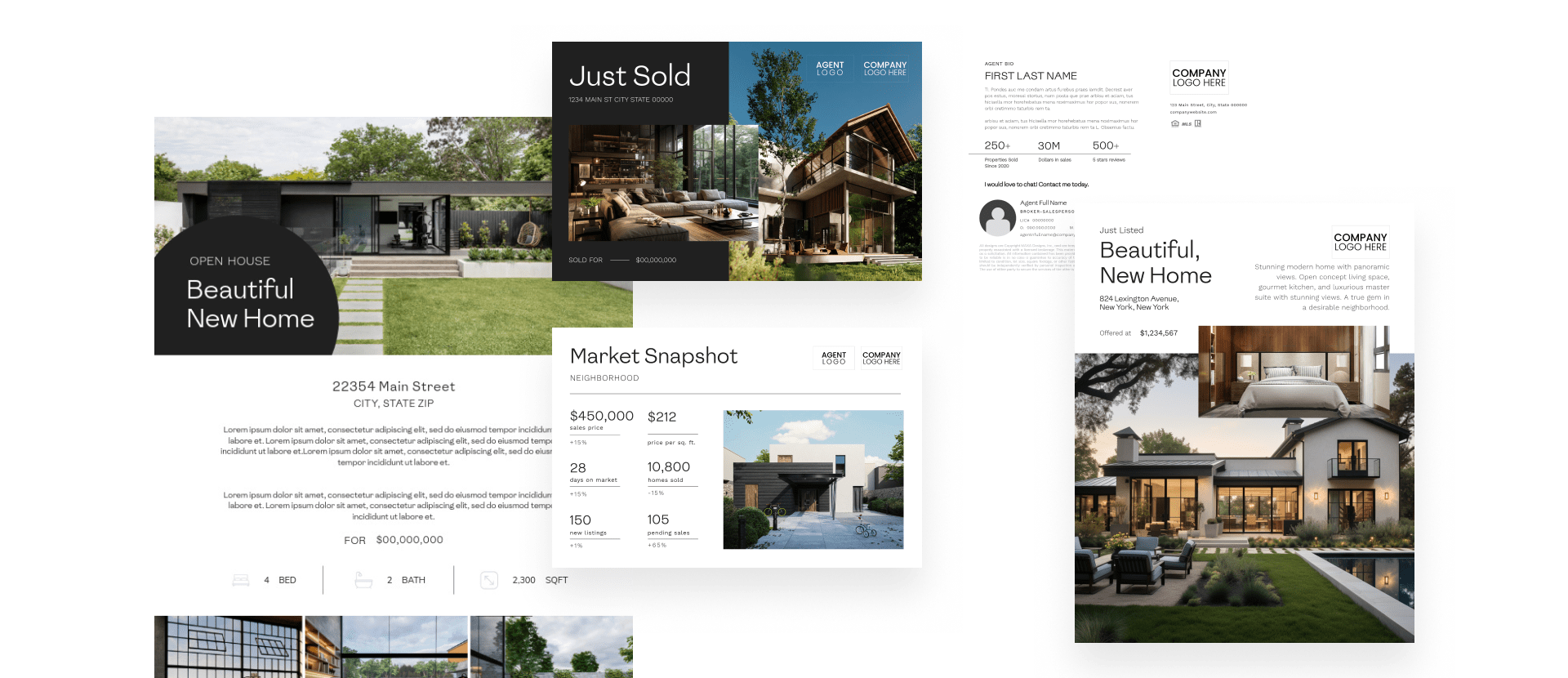
The effectiveness of real estate marketing templates depends on how well agents use them. The easier it is to personalize and customize templates, and the less time agents spend searching for or adjusting them, the more valuable those templates become.
Let’s explore how the right template system can help your agents advertise better, save time, and stay compliant with brand guidelines all at once.
What Are Real Estate Marketing Templates?
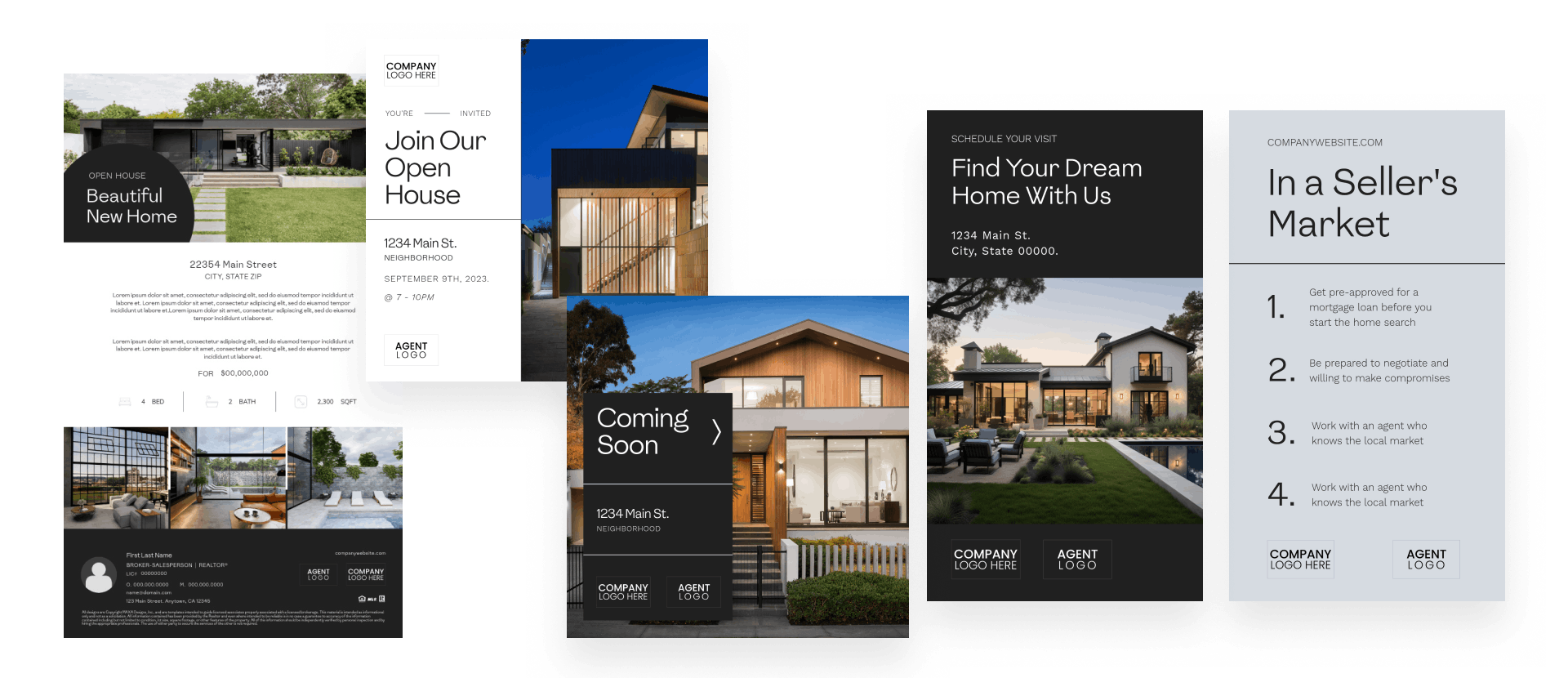
Real estate marketing templates are prebuilt assets that agents and teams can reuse by simply replacing property details, photos, or messaging. They’re designed to eliminate the need to start from a blank page every time a listing goes live or when you need to launch a new marketing campaign.
Additionally, templates are created with consistent layouts, fonts, colors, and logo placement, which is how agents achieve that quick turnaround. We know that listings go live quickly, price changes need immediate visibility, open houses are promoted on short notice, and the early bird catches the worm. Or, in this case, the buyer.
Either way, templates support this pace by turning hours of design work into minutes and reducing approval delays caused by off-brand design.
Common examples of real estate templates include:
- Social media graphics
- Listing presentations
- Email campaigns
- Property flyers and brochures
- Market stats
- Testimonials
Now, it’s not like templates remove custom design from the picture, which still has a place in the grand scheme of things. Custom design is ideal for major brand launches, high-end campaigns, or unique initiatives that require a fully bespoke approach and resources. On the other hand, templates are ideal for situations where you need volume and control without micromanaging agents or sending their stress levels through the roof.
Why Real Estate Marketing Template Usage Matters
In real estate, you blink, and you miss it. The market is that competitive. With over 360,000 registered brokerages in the U.S., according to the National Association of REALTORS®, you can imagine how many agents are fighting for attention, and how fast this market moves.
Templates ensure marketing keeps up and branding stays consistent across all changes. Without templates, agents can easily lose their way and make changes to logos, colors, and even fonts, especially if they have multiple design tools at their disposal. With templates, the brand stays consistent across social, email, print, and presentations, while agents can still personalize their message.
With templates, marketing teams won’t have to accommodate last-minute design requests. As a result, agents won’t be waiting on approvals. Everyone works from the same starting point, which means fewer mistakes and better-looking materials across the board.
Common Types of Real Estate Marketing Templates
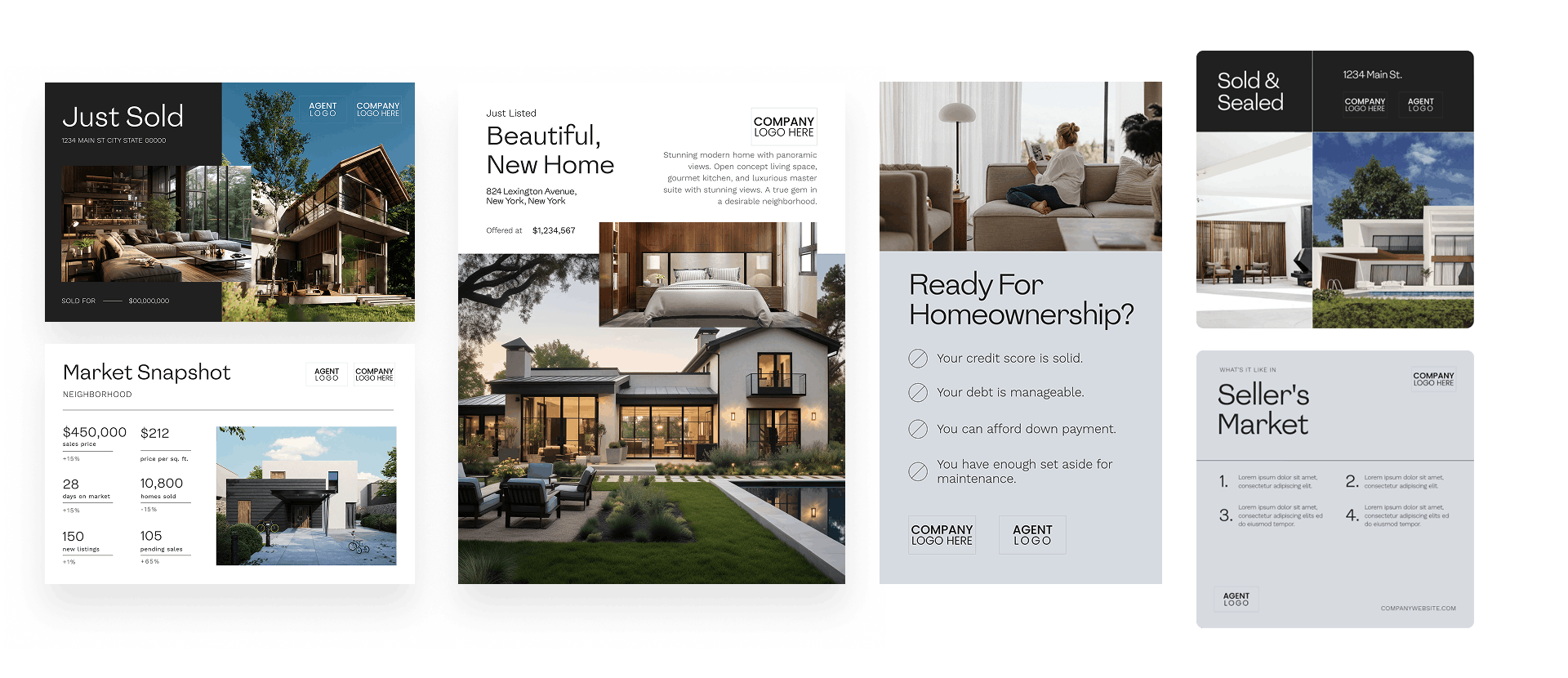
Real estate marketing templates generally fall into four core categories. Understanding these types helps agents produce consistent, on-brand assets at scale and choose the right template each time.
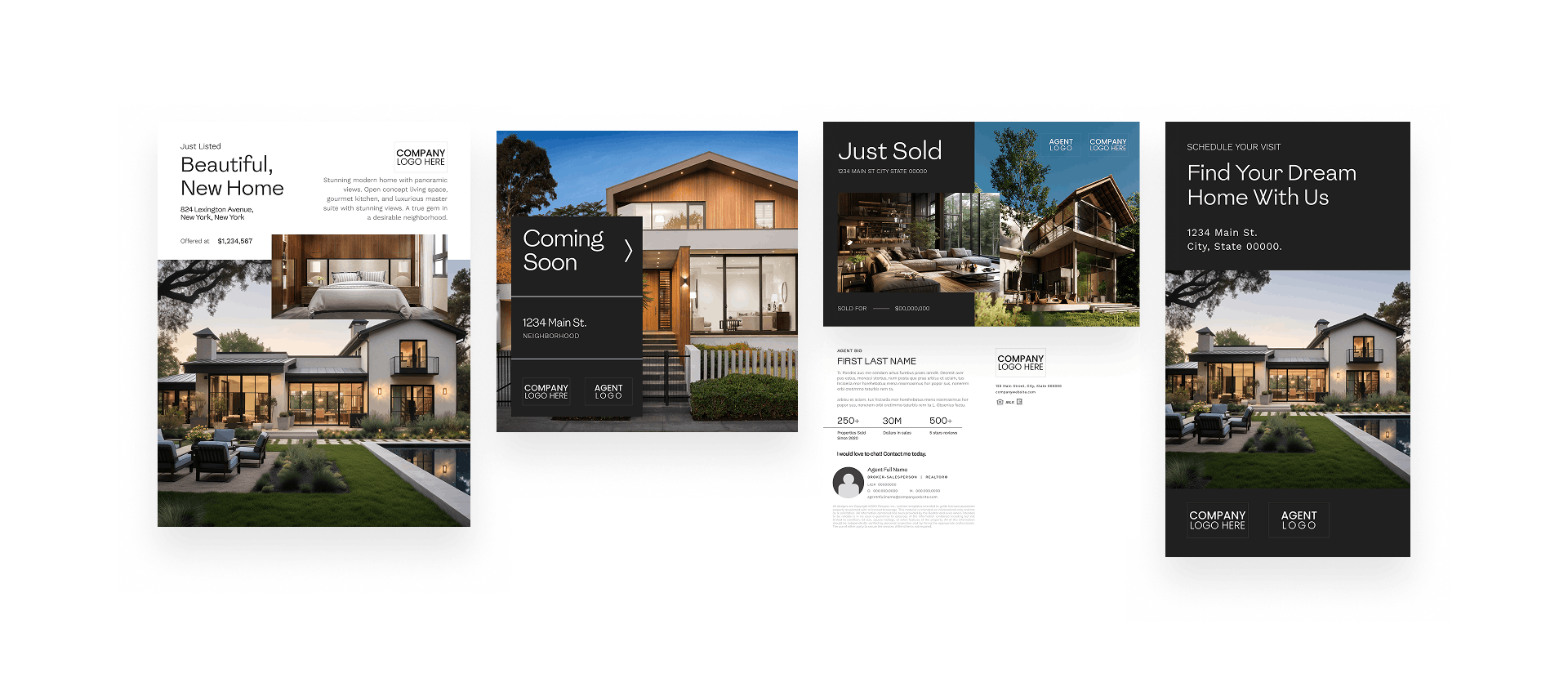
For example, MAXA offers over 300 templates within these categories, enabling you to automate content production without relying on designers. Let’s check them out.
Social Media Templates
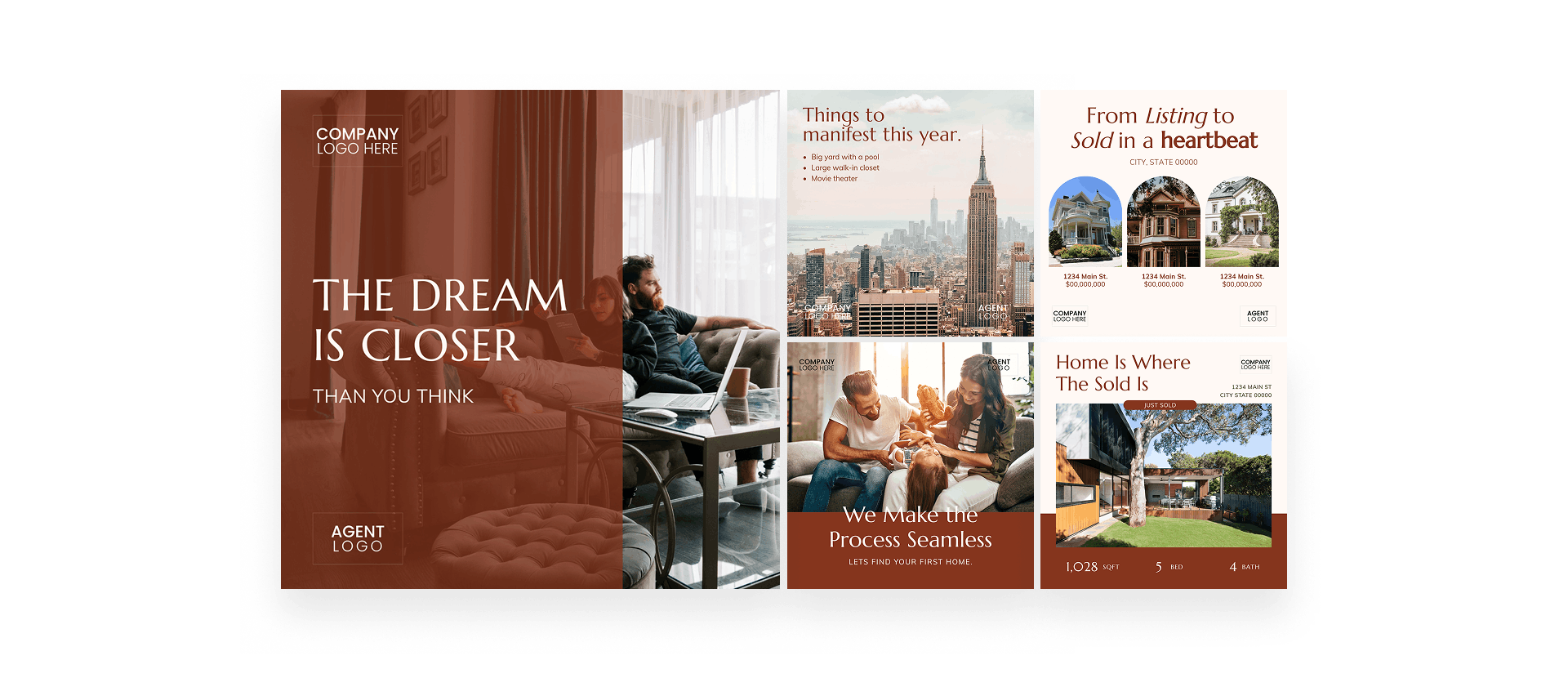
In social media, templates are designed to deliver speed and consistency. An Instagram post template, for example, already knows where the photos go, how much text to include, and where the logo should appear. Agents simply drop in listing images, update the address or price, and publish.
Stories work the same way. The templates are pre-sized, on-brand, and designed to be created quickly. Facebook listings and announcements benefit from the same structure, and even reels cover the same logic. The templates provide title placement, typography, and branding so that the video content looks polished.
Listing & Presentation Templates
A listing presentation template auto-populates content such as the intro, agent info, key services, timeline of the process, and other segments that are shared on all listings, while leaving enough room for agents to change the info about the specific one, such as the price and other details.
Buyer and seller guide templates are another example of presentation templates that make education easier and more professional. Brokerages create them once, agents customize and share them everywhere, so there’s no danger of people bringing you outdated collateral on open houses.
CMA and pitch deck templates are another example in which charts, layouts, and sections are already predefined, so agents spend less time formatting and more time explaining value.
Print & Offline Templates
Print and offline materials still work, and with a clear purpose and structure, agents can release templates in bulk while staying on brand.
- Flyers: Flyer templates already include areas for photos, pricing, and key details. Agents simply update the content and print, and don’t have to worry about spacing or visual clutter.
- Postcards: Postcard templates enable agents to quickly run just-listed, just-sold, or farming campaigns while maintaining a consistent look across neighborhoods.
- Yard signs: Yard sign templates lock in logo placement, colors, and typography so that not only are agents compliant and on brand, but the signs can be legible from a distance.
- Brochures: Brochure templates organize longer-form property information so that agents can easily share details without overwhelming buyers.
How Agents Actually Use Marketing Templates Day-to-Day
The value of templates is measured not only by their visual appeal but also by how quickly agents adopt templates in their daily work and by their practical value. This is how they do it.
Plug-And-Play Customization
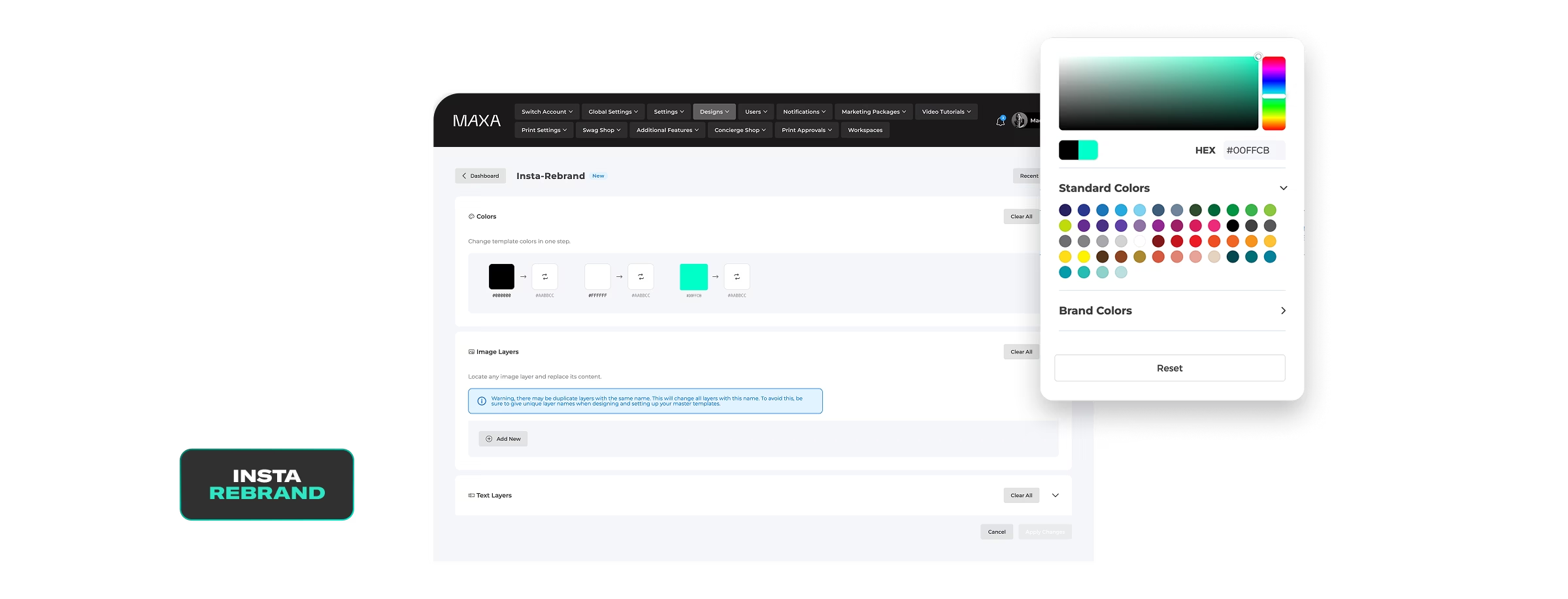
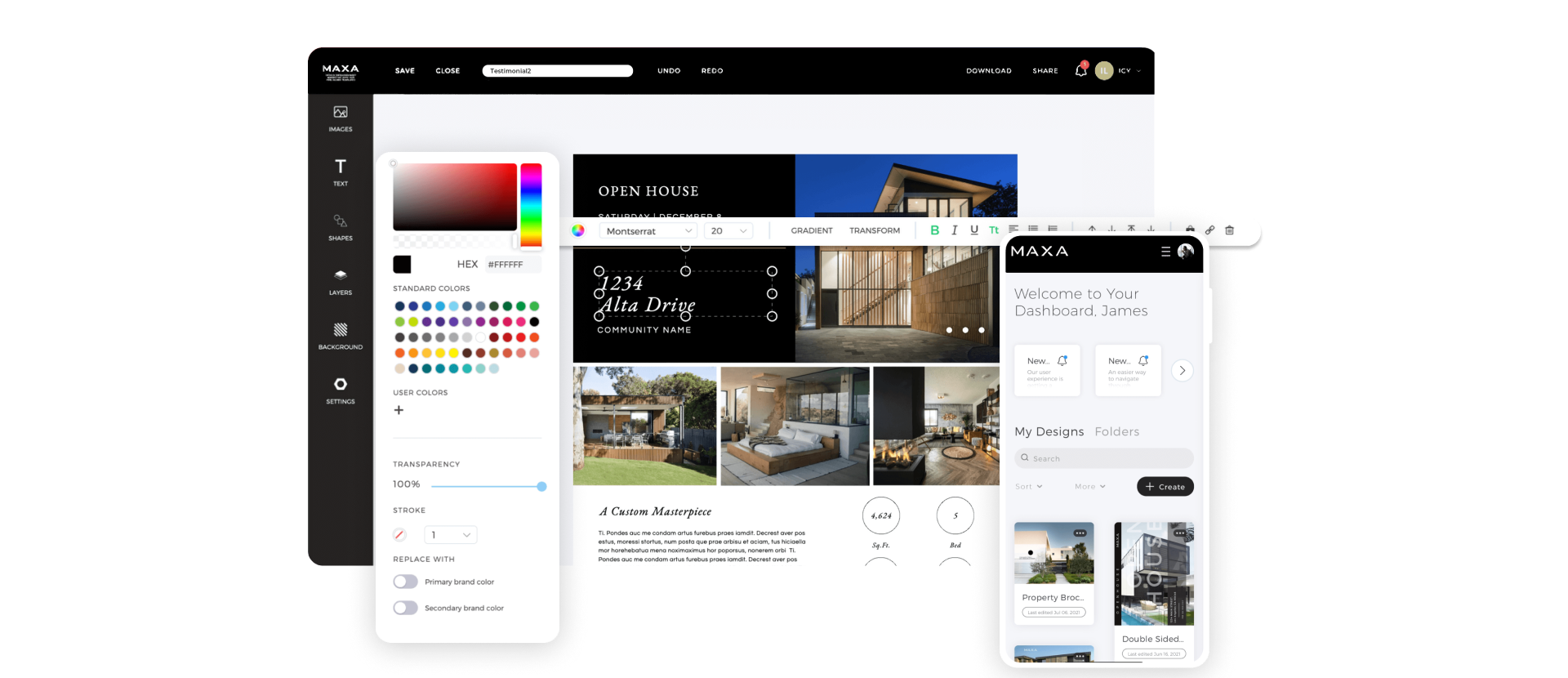
With platforms like MAXA and their automated smart templates, much of the work is handled before the agent even starts editing. Contact information, personal branding, team or DBA branding, co-partner branding, MLS property data, license and state disclaimers, and loan pricing scenarios can be populated automatically.
No more manually copying and pasting details into every asset. Now, it’s all about choosing the template, making quick edits, and swapping photos and refining copy before they publish it.
Reusing the Same Template Across Multiple Listings
With templates, the framework stays consistent, and it’s the property-specific data that updates each time, so that agents don’t have to redesign anything. The structure is already there. So, in essence, a single just-listed template can be used for dozens of properties.
Adapting Templates for Different Neighborhoods or Audiences
The same base layout of a template can be used to market a luxury condo downtown or a family home in the suburbs. The trick is to make simple shifts in tone, imagery, and highlights. For the structure to remain brand-compliant, but for a different target audience, the content will need to be adjusted slightly.
Scaling Marketing Without Starting from Scratch
With branding, compliance elements, and property data integrated into templates, marketing becomes significantly easier and faster. MAXA’s platform also allows you to create automated marketing packages for property listings, social media assets, and even new hires, so whenever you have a new agent joining, the entire marketing suite is already waiting for them.
Best Practices for Real Estate Marketing Template Usage
Let’s have a look at the best practices for maximizing real estate marketing templates:
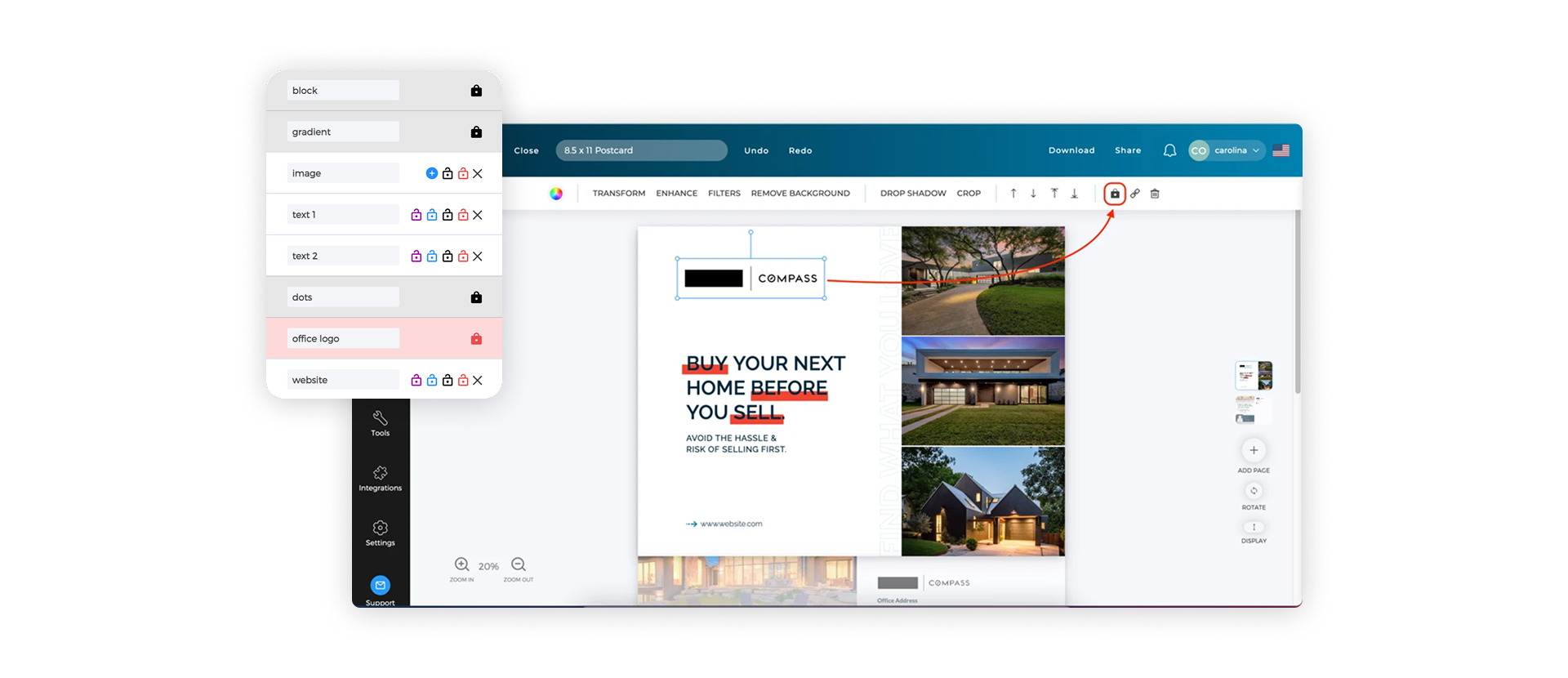
- Customize beyond text: Admins permit agents to change not just the address and price on a template, but also update imagery and headlines, and add different shapes, provided the locked and editable template settings allow it.
- Keep typography and spacing consistent: Even though the template editor does have a section for adding shapes and text, it’s smart to lock the typography and spacing elements so that agents can resist the urge to change the design and keep the materials looking professional.
- Use brand colors intentionally: Brand colors are definitely an element that shouldn’t be changed, no matter the type of material used. It all has to do with making sure call-to-action and highlights are strategically placed and consistent with the brand.
- Optimize templates per platform: What works on Instagram won’t necessarily work in email or on a postcard, or vice versa — design for how the content will be consumed, with particular emphasis on mobile devices.
- Refresh templates regularly to avoid “template fatigue”: Even if you are pretty happy with the design of your template, don’t rest on your laurels. Update photography styles or refine the layout to keep marketing looking fresh.
Common Mistakes to Avoid
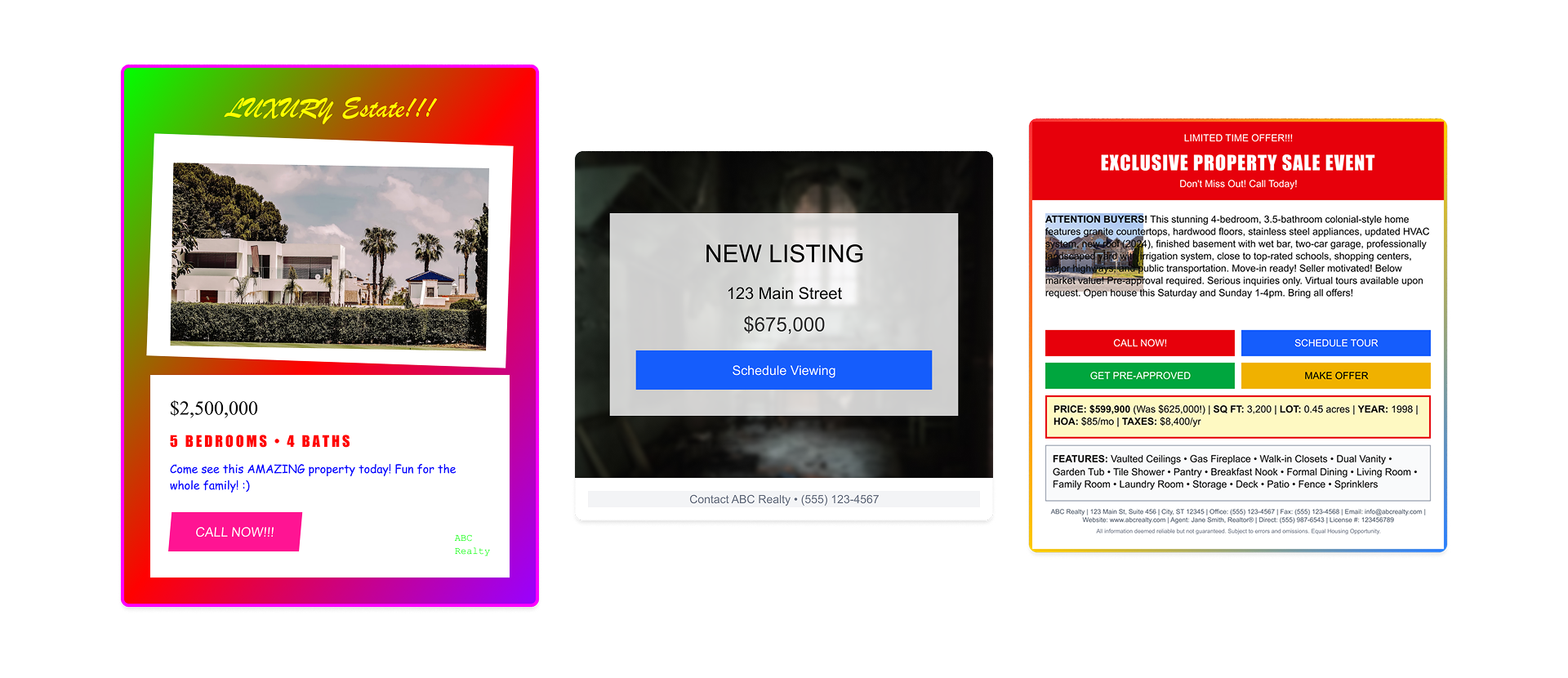
Although templates pack a mean punch, they are not without flaws. Here are the most common pitfalls you should avoid:
- Overusing generic templates: If you consistently opt for a template that any agent can use, it won’t strengthen your brand. Quite the opposite, actually. There is an even higher price to pay if you use free design tools for real estate. Then, those templates are literally out there for everyone to use.
- Ignoring brand identity: Even though we said changing things from time to time will freshen up the looks, don’t compromise on fonts, colors, or tone. Changing these can hurt more than changing the logo sometimes.
- Poor image quality: Avoid low-resolution, dark, and poorly cropped photos. Visual quality is a cornerstone of real estate marketing done right.
- Using the same design everywhere without adaptation: Instagram graphics don’t belong in email newsletters and vice versa. Each platform needs a particular approach to design.
- Prioritizing speed over clarity: Speed is important, but not at the expense of legibility, accuracy, or proper CTAs. Don’t fall into the trap of prioritizing volume over quality.
The ultimate goal is to use templates efficiently, not just automate content production for the sake of automation.
When to Use Templates vs Custom Design
Templates work best for the majority of day-to-day marketing, such as new listings, price changes, open house promotions, and social posts. Everything that, in essence, gets repeated constantly can be templatized.
On the other hand, custom design becomes essential when you’re rebuilding or refining the identity of your brokerage. Even when launching a new luxury campaign. This is where MAXA steps in with our structured rollout. We provide early discovery and platform consultation, brand alignment and template planning, test builds, and leadership training, after which the only thing remaining is expansion.
The bottom line is that custom design is there to set the standard. Templates that emerge from it carry it forward at scale.
How Professional Design Elevates Template Performance
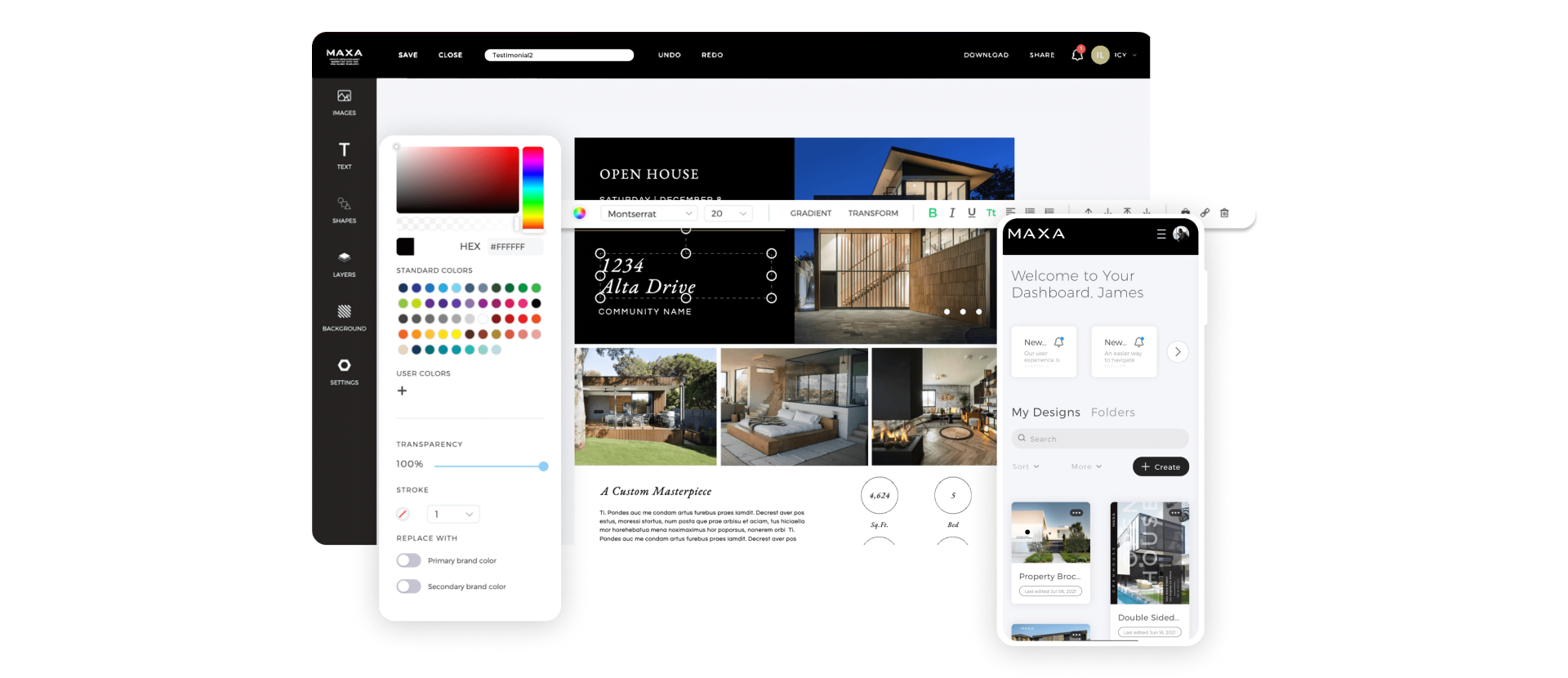
Professional design creates a clear visual hierarchy, intentional CTAs, balanced spacing, and messaging that actually guides users to the next step and conversion. In times when attention spans seem to shrink each day, structure plays a significant role in engagement and response.
For example, typography, the right colors, and high-definition imagery are something that designers focus on when creating marketing templates. Additionally, fields such as associates’ contact info, headshots, and license numbers are always auto-populated, so templates can be ready for publishing much faster.
Professionally-designed templates for business cards, presentations, and direct mailers are ready for on-demand printing, be it through MAXA’s platform or your local printer.
In crowded markets, and it doesn’t get more crowded than the real estate business, when listings, presentations, and campaigns look like a part of one cohesive unit, it’s a good sign for prospective buyers and agents alike. This is where Maxa Designs’ expertise in real estate branding and marketing systems makes all the difference.
Templates are part of a brand infrastructure built for scaling, with clear categories, a structured design, and built-in guardrails such as locked elements and upload zones to ensure compliance.
Final Thoughts
Templates are tools designed to save agents time, and at the same time protect brand consistency and increase marketing impact without adding hundreds of hours of design work. Still, they are not works of miracles. Templates need strong branding and a clear strategy.
The best approach is when custom design leads the way. It sets the foundation, and then templates scale it across every listing and campaign. With the right real estate marketing design system in place, growth is bound to come and become consistent, and far easier to sustain.