As real estate brokerages grow, they tend to lose branding consistency if they’re not paying attention. The more agents you hire, the more personal brands begin to conflict with the overarching guidelines, making it harder to control the brand image across all marketing materials.
Loss of real estate brand consistency erodes trust and credibility, increases client scepticism, diminishes recognition, and can lead to financial and operational inefficiencies.
That’s why we’ve made this guide to help you fix inconsistencies and avoid all these major issues. Keep reading for actionable advice.
What Real Estate Branding Consistency Actually Means
Many brands in the real estate market think that real estate branding being consistent means everything should look, sound, and feel identical. However, consistency doesn’t equate sameness.
Consistency is supposed to be rhythm. It should allow flexibility in marketing across platforms while ensuring the brand’s core essence stays intact.
Here’s what that means:
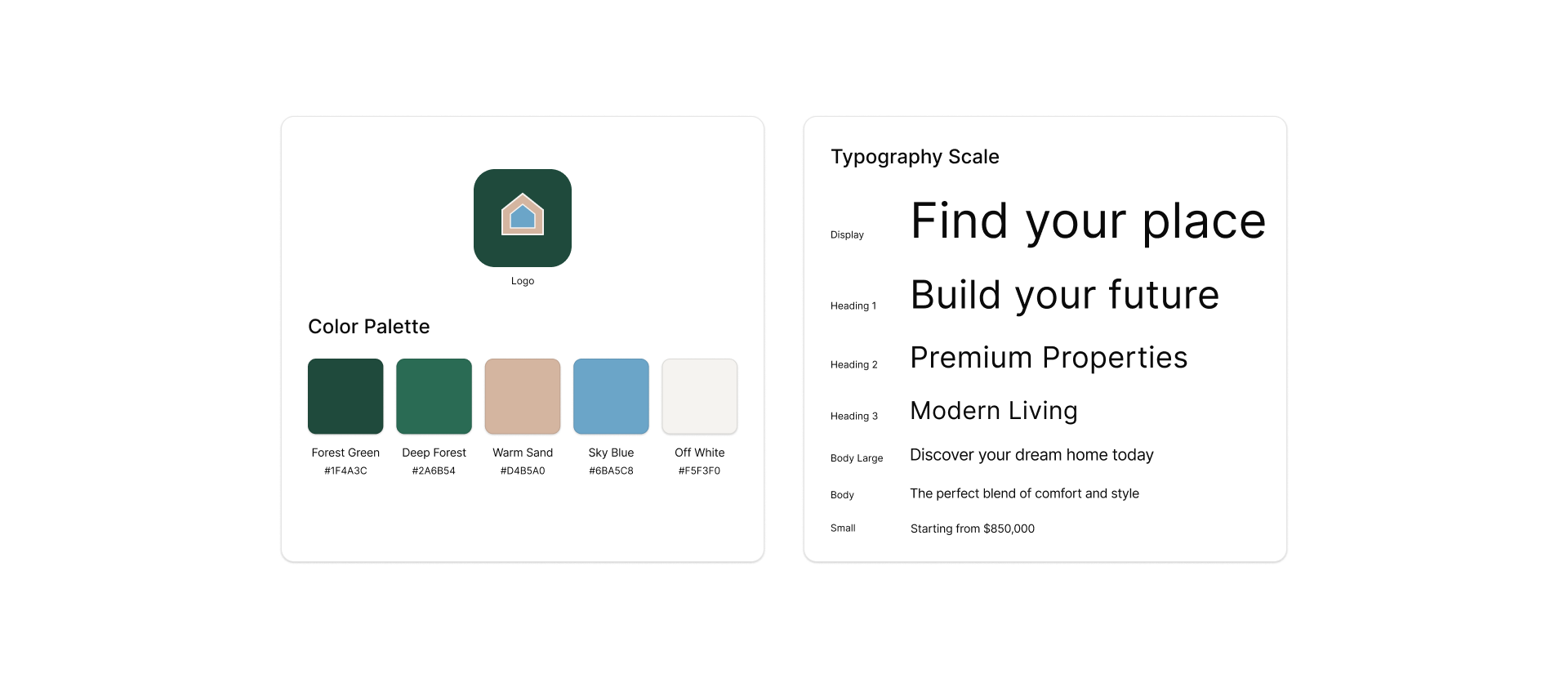
- Visual consistency: Your logo should vary across media while remaining consistent. The color palette should be used consistently across the board, and the specific font should be used appropriately across areas.
- Messaging consistency: Your brand should sound like the same person, so to speak. The tone of voice needs to be consistent across all channels, while your core values need to be the foundation. You should also occupy a specific position in the market, like being a luxury brand, instead of trying to capture the entire market.
- Channel consistency: Since most potential clients will experience your brand in mere fragments by seeing just an ad or two, you need to ensure the experience remains the same in both print and digital.
- Experience consistency: Clients should have the same experience with your brand, regardless of the agent. That’s why all agents and offices must follow the same brand standards.
All of this is crucial because clients will notice these things as they are subconsciously looking for reasons not to trust you. If they notice inconsistencies, they’ll see them as red flags.
How to Regain Control of Your Real Estate Brand
Over time, as your business grows, it becomes harder to fix all the off-brand mistakes, like incorrect fonts and outdated logos across marketing material. You might think micromanagement is needed to prevent this, but it’s not. It’s all about brand infrastructure. You need a foundation that enables agents to work quickly without fear of making mistakes.
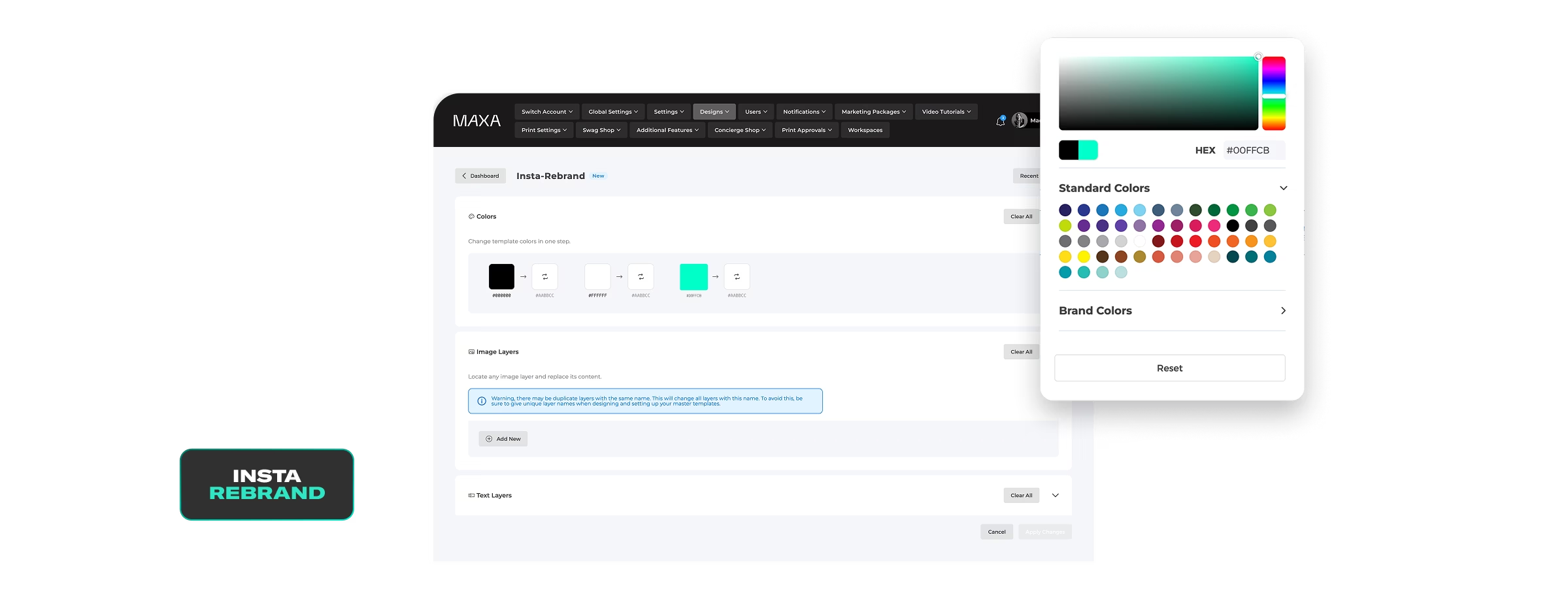
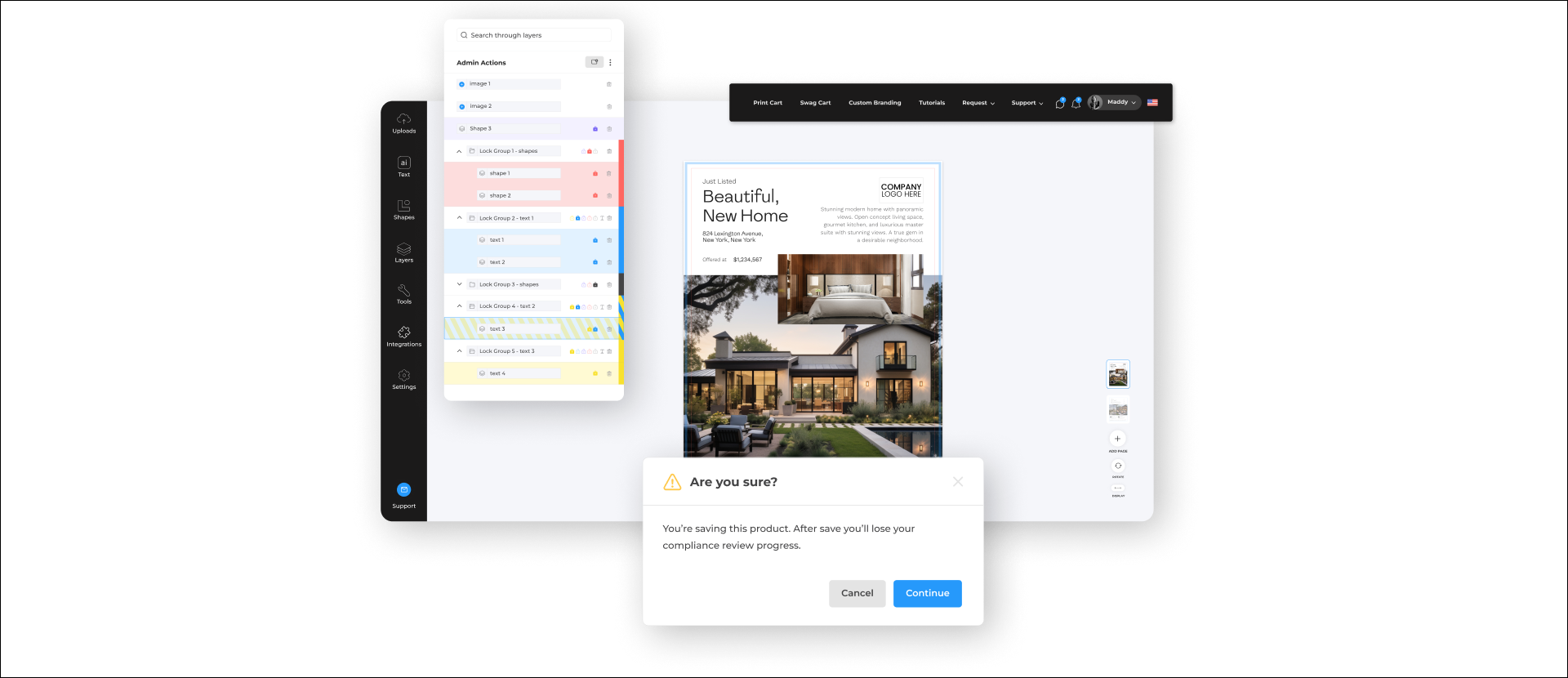
One of the main priorities is to implement a centralized digital asset management system. Agents can easily find what they need in it, and no one will fear them using an off-brand flyer.
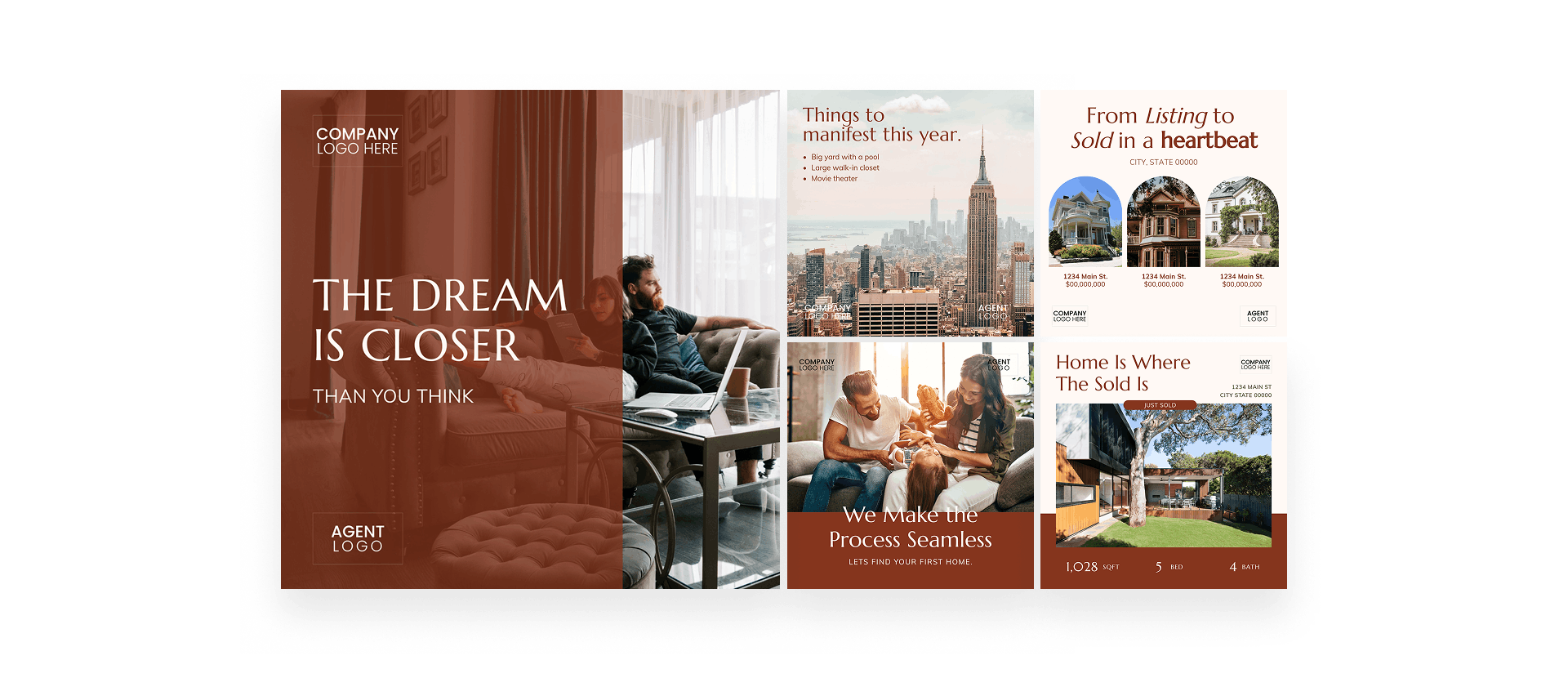
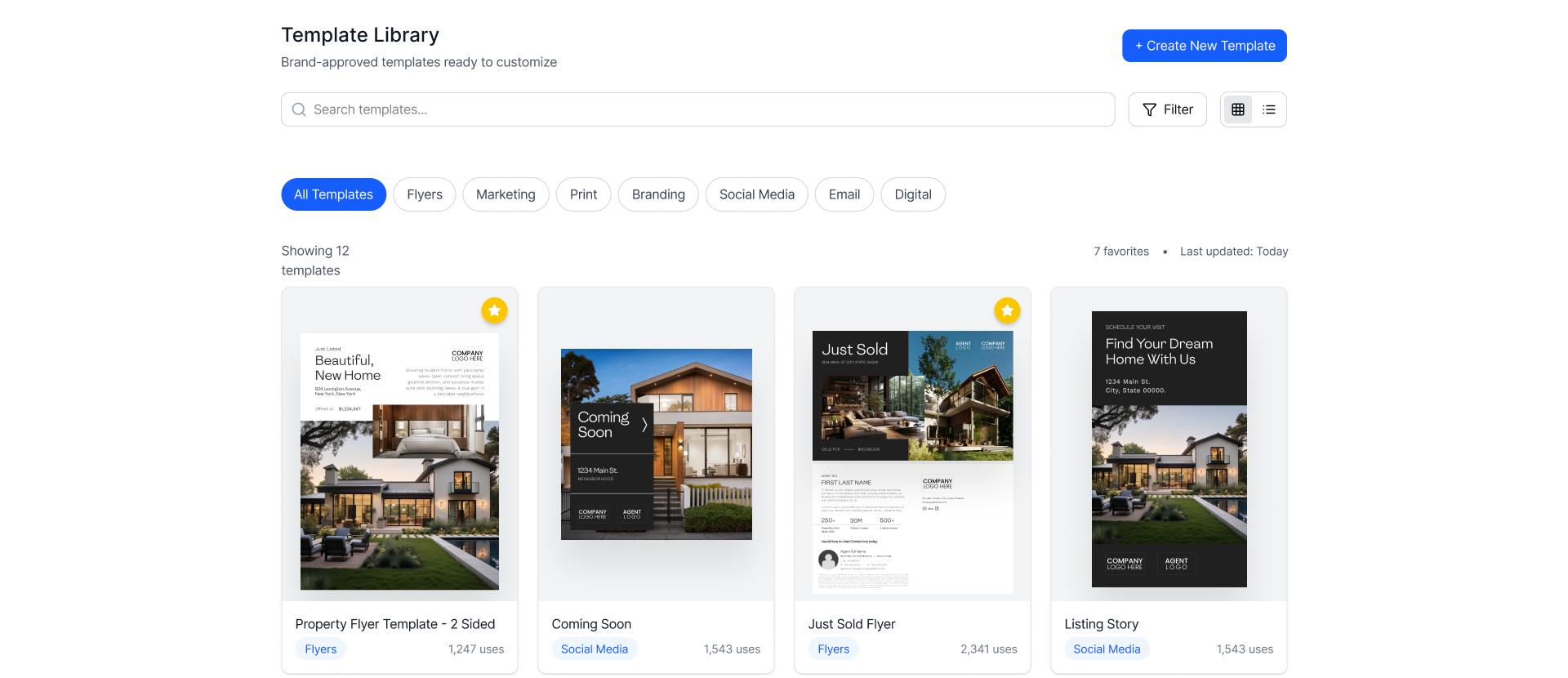
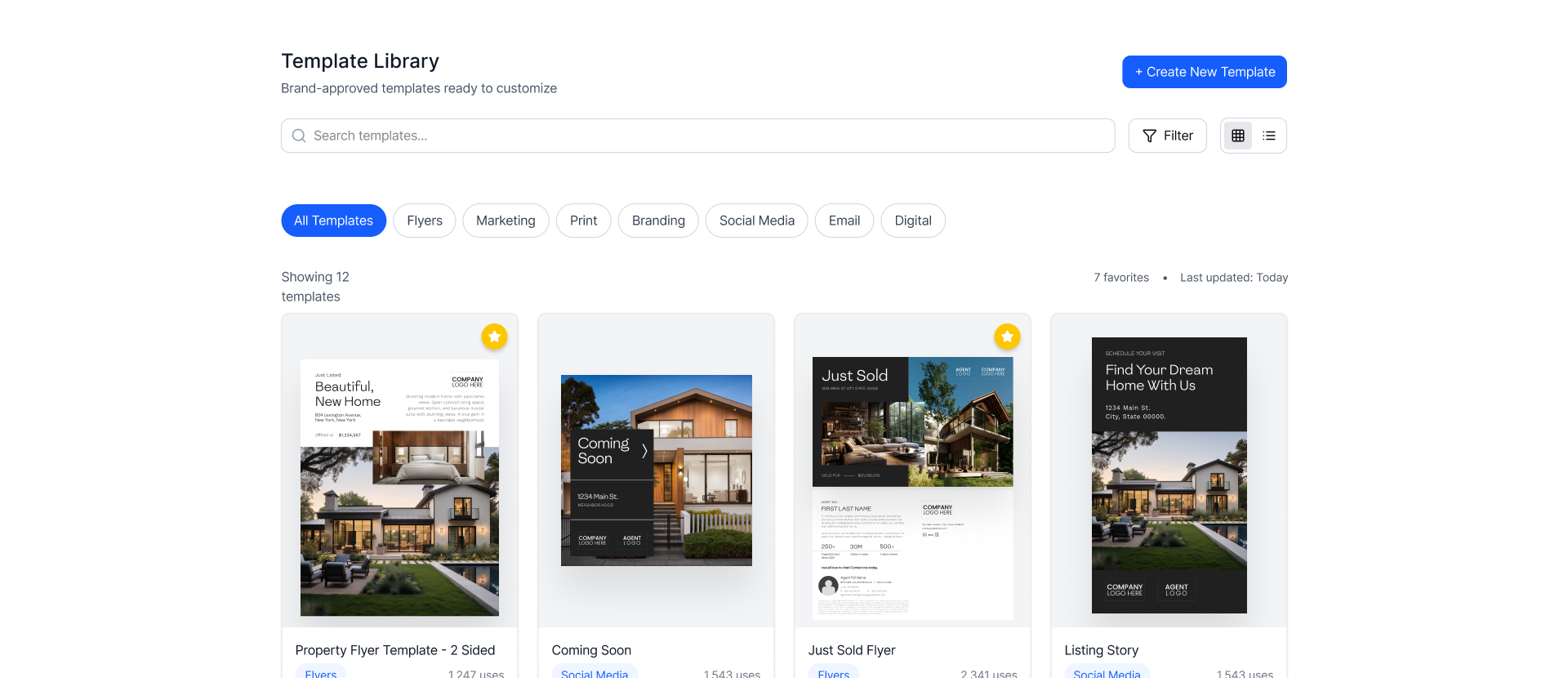
You also need a library of templates agents can use for social media posts, flyers, and presentations.
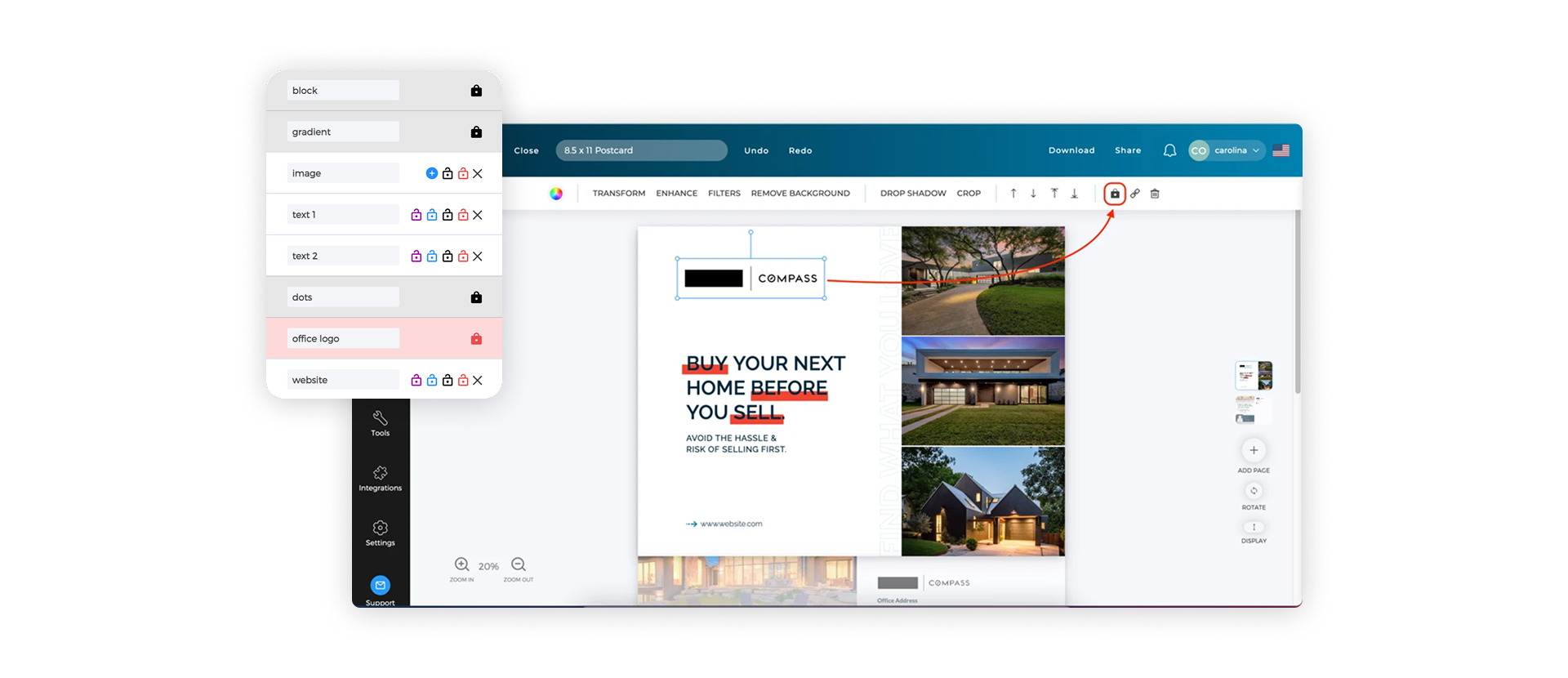
You can have all of this in the same system, where you can also set clear roles and assign specific permissions to both new and established agents. At the same time, you can set clear brand guardrails that still provide enough flexibility for agents. You should have non-negotiables here and flexible areas, i.e., the things agents can change freely.
This will also help you stay on track without having to approve each new material.
How to Balance Agent Freedom With Brand Consistency
Consistent real estate branding is still possible even if agents have freedom, as long as it’s all balanced out. But balancing an agent’s personal brand with the brokerage’s overall brand doesn’t need to be about compromise, but alignment.
The brokerage's role is to maintain its brand while still giving agents the freedom to showcase their local expertise and personality in their work.
This is where the non-negotiables and flexible areas in branding we’ve mentioned come into play. The non-negotiables should always be:
- The brokerage logo
- Legal disclaimers in listings
- Primary brand color as the dominant visual anchor
- The brand's main fonts
Almost everything else, as long as it doesn’t affect the core of the brand, is up for grabs, so to speak. For example, the listing layout must be fixed, but the copywriting tone can still vary.
How to Build a Scalable Brand Consistency Framework
Here’s a quick step-by-step operating model for building a scalable consistency framework, which will ensure your 100th agent represents your brand just as your first did:
- Define non-negotiables: Create items that will never change, regardless of the agent or property type.
- Centralize assets: Establish a centralized brand hub to store all files in one place.
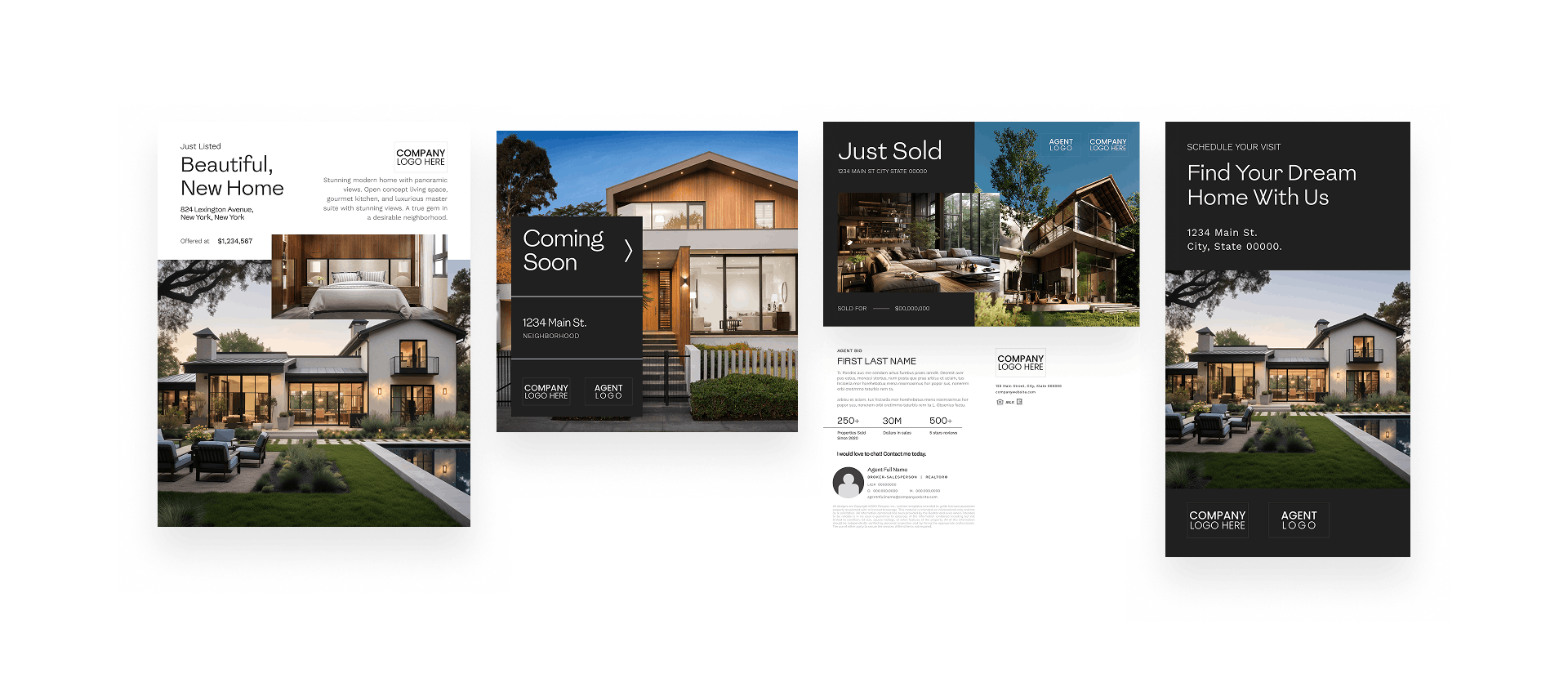
- Template everything your agents touch: Build up a library of templates that follow your brand’s image to the letter.
- Automate approvals: Establish system rules that automatically grant approvals when an agent uses a pre-approved template without violating rules.
- Educate without friction: Replace 100-page manuals with shorter, specific guides and 5-minute how-to videos.
- Review and evolve: Do a brand audit every six months to see what works and what doesn’t. Analyze templates and consider eliminating rules that are repeatedly broken.
Why Brand Inconsistency Is a Huge Problem in Real Estate
The biggest issue in maintaining brand consistency in real estate is the brokerage and the real estate agent inadvertently being at odds.
Every agent is a company within a company. They have to stand out to be successful, which can often lead to deviations from the main brand. They also need to think locally, which can also lead to divergences from the brokerage’s brand.
Additionally, larger brokerages with 50, 100, or even 300+ agents lack centralized systems for templates and overall marketing.
Brand inconsistencies resulting from these issues erode trust and recognition. Moreover, referrals suffer, as former clients struggle to explain your brand to others.
How Top Real Estate Brands Maintain Consistency at Scale
The biggest real estate brands know how to roll out marketing templates to 500 agents without losing control. They don’t have a brand police model, but a brand infrastructure model.
They maintain brand consistency by building systems that make staying on-brand the easiest path to take because they:
- Utilize centralized brand foundations via cloud-based portals
- Use modular design to create flexible templates
- Create locked brand elements and leave control over others to agents
- Set clear rules that enable customization, not set restrictive boundaries
The Real Causes of Real Estate Brand Dilution
There’s never a single cause of brand dilution. A few of the most common ones include:
- Too many people are creating brand assets: Loss of control occurs when there are too many agents and no centralized system.
- There’s no single source of truth for branding: You lose control over your brand’s truth when agents don’t know where all the elements are.
- You have static brand guidelines that no one uses: Guidelines that can’t be integrated into an ever-evolving workflow become useless.
- Multiple tools produce materials: Agents often use various tools in their work, and when these aren’t integrated, it becomes easy to create points of failure.
- There are no guardrails for personalization: Without technical guardrails, you will lose control over the information hierarchy.
Signs Your Real Estate Brand Is Finally Under Control
Once you resolve the inconsistencies in your branding, you’ll need to wait to see positive results, since it’s not an immediate fix. You need to look for the signs that point to things getting back on track:
- Faster asset creation: Agents are finally spending more time on promotion rather than production.
- Fewer off-brand materials: When you check your agent’s social media feeds and local ads, you feel a recognizable quality.
- Stronger brand recognition: You see and hear positive things about your brokerage, meaning the public is finally recognizing your brand.
- The marketing team isn’t overwhelmed: The marketing team is finally spending most of its time on strategy and creative work.
- Agents are adopting the system voluntarily: This is the ultimate sign, as it shows they are no longer fighting the system but embracing it because it makes things better.
Real Estate Branding Consistency Checklist
To move from dilution to consistency, you need a system that will be your operating model. Here’s one you can use:
- Central brand foundation.
- Do you have a centralized, cloud-based hub for all logos, colors, and fonts?
- Are all brand assets, like headshots and awards, updated to the current year?
- Is there a simple core identity guide for agents?
- Unified templates across channels.
- Do all flyers, social media stories, email headers, and listings feel like they belong to the same brand?
- Is the recruiting material as polished as the marketing material?
- Clear customization rules.
- Do your templates have locked and editable areas?
- Do you have a menu of styles agents can choose from without going off-brand?
- Easy agent access.
- Can agents access any marketing asset quickly from any device?
- Are brand assets embedded into the tools agents use?
- Can agents generate assets without a manager’s approval?
- Ongoing brand governance.
- Do you have a process for agents requesting new template types?
- Do you have scheduled reviews every six months to address inconsistencies?
Final Thoughts
In real estate, branding consistency is not a choice but a fundamental factor that builds trust. The more agents your brokerage has, the more it becomes essential to have a system in place that lets you keep that consistency.
Moreover, modern design systems are there to help you turn branding from a bottleneck into a growth factor.
So, are you ready to assume control? Explore how modern real estate teams operationalize brand consistency to form reliable, fast, and scalable brokerages. Contact MAXA Designs if you need help.