Real estate franchise marketing is about taking advantage of the strong parent brand and its advanced CRM, leads, and recognizable branding to establish a better position for yourself in the local market. Given the nature of the cooperation, where the lines of distinction are often blurred, achieving that feat is easier said than done.
In this article, we’ll take a closer look at how successful real estate franchisees strike a balance between the autonomy of their operations and the brand control franchisors demand.
Why Franchise Marketing Is Challenging in Real Estate
Let’s put fees and royalties aside for a second. While they are a challenge in their own right, they are simply a part of how the franchise model works. The bone of contention is the tension between autonomy and control.
On the one hand, the brand must be cohesive, recognizable, and trustworthy, regardless of where a client encounters it or in what format. Franchisors are staunch about that. On the other hand, individual offices and agents need the freedom to market themselves in ways that resonate with their specific local communities, price points, and potential customers. Both sides are right, and that’s where the challenge begins.
Real estate marketing doesn’t happen in one central place. We are talking about dozens, sometimes hundreds, of offices. Each market is different, and each agent brings their own ideas, habits, and level of marketing experience to the table.
From a brokerage or franchise marketing perspective, the risks add up fast. Logos get modified. Fonts drift. Messaging evolves in ways that weren’t approved or intended, so the natural response is to exert more control and get more approvals in place. That’s a breeding ground for bottlenecks.
It causes agents to sit idly while waiting for marketing materials to get approved. Marketing teams will spend hours going over the minor edits. Printed materials raise the stakes even higher. Digital mistakes can be corrected. Printed ones can’t. In real estate, where a lot of agents print their own collaterals, the risk of outdated branding, incorrect information, or non-compliant messaging is real.
What Real Estate Franchise Marketing Requires to Scale Successfully

Franchise marketing systems need to guide behavior and remove friction that agents face to ensure scaling runs smoothly. Promoting a specific MO is how the job gets done. There are four essential components to that:
- Strong central brand identity: Set clear visual and messaging standards that are easy to follow and hard to break.
- Local market personalization: The ability to personalize collaterals to feature the right messaging to their audience without going off-brand.
- Repeatable, scalable workflows: Establish a system that eliminates one-off requests and reduces reliance on manual approvals.
- Compliance-friendly templates: Pre-approved layouts and language that protect the brand while letting agents move quickly.
When these foundations are in place, franchises can scale marketing and still have that speed and local presence they are after.
The Balance Problem: Autonomy for Agents vs. Brand Control for HQ
It’s the competing priorities that create the tension in real estate franchise marketing. Agents and franchisees are after speed and flexibility. They want the ability to quickly customize materials for their listings and local markets without delays, since time does equal money in this business.
On the other hand, the big guns want to ensure the brand is protected at all times. It’s different principles that guide them. Consistency, compliance, and risk management matter at scale; when agents can freely edit marketing assets, brand standards go out the window, and legal issues become more likely. These are costly and time-consuming problems.
Too much freedom leads to diluted branding and compliance gaps. Too much control slows production and frustrates the field. The catch-22 personified. That is, until locked and editable templates hit the scene.
How Locked and Editable Templates Create the Balance Franchises Need
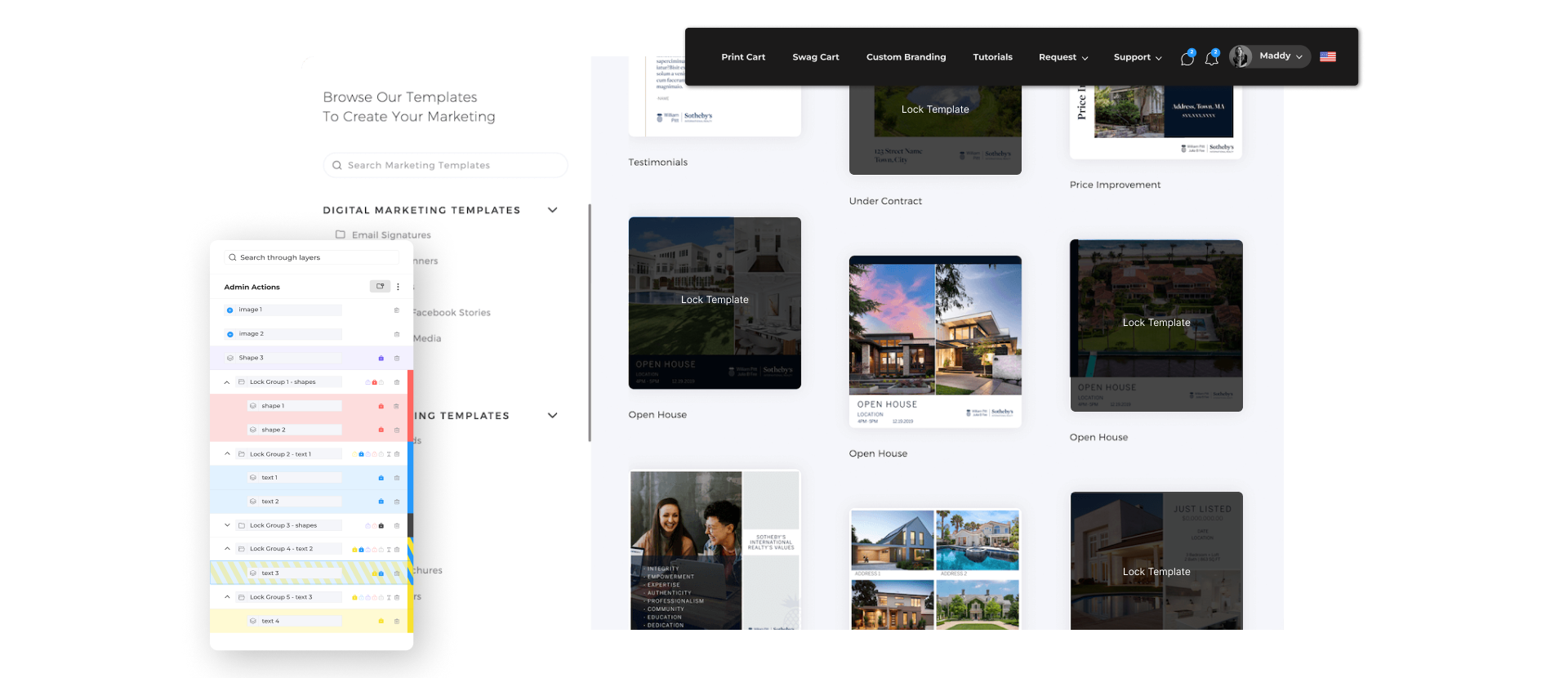
Locked and editable templates are among the simplest ways franchises address the autonomy-versus-control issue, as they define clear boundaries between what must remain consistent and what can be customized.
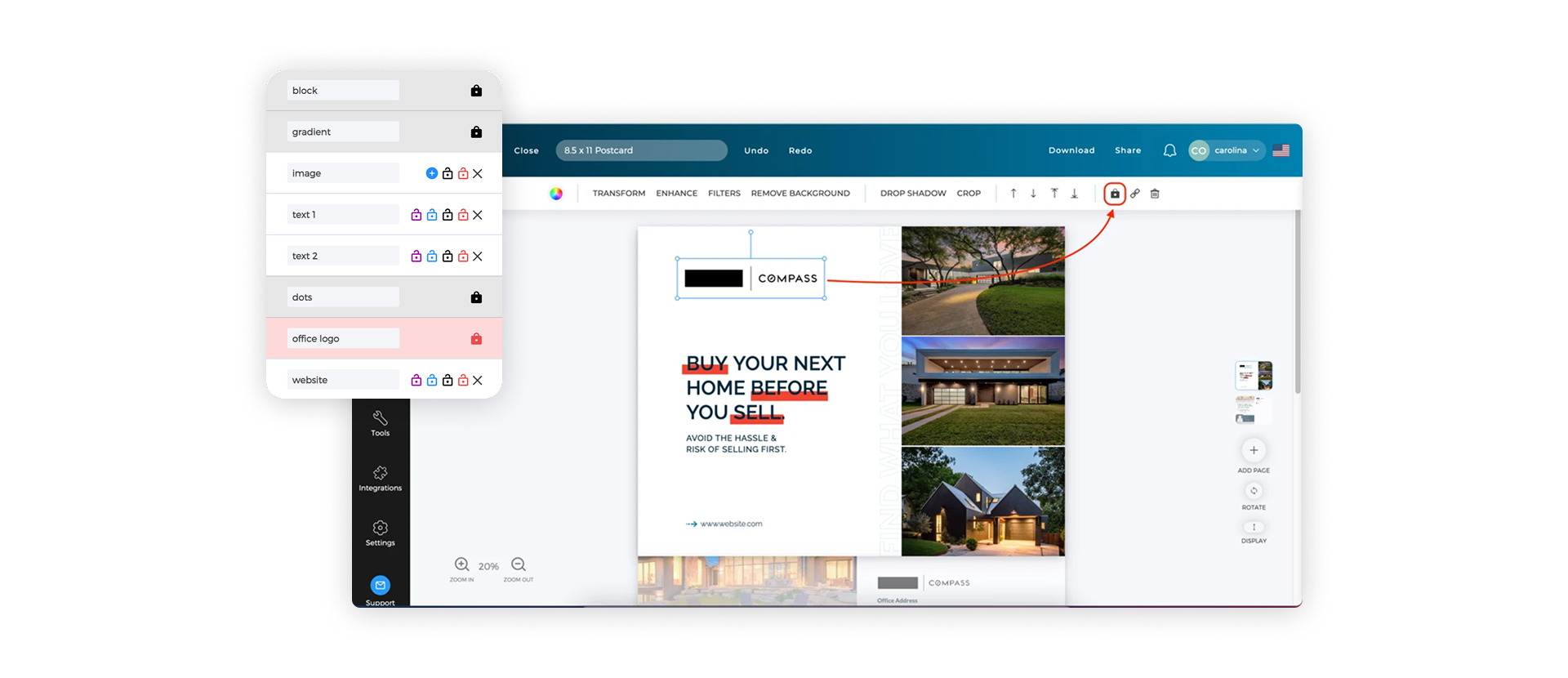
When put into action, these templates can make brand-critical elements like logos, colors, typography, layouts, and required disclaimers remain locked, ensuring every asset reflects the franchise accurately. No slipups and hours for the design and marketing teams to fix the mess.
At the same time, agents can customize the editable elements, such as property details, local messaging, and contact information, without approvals or rework.
This structure prevents off-brand variations by design while still giving agents the speed and flexibility they need. The result is controlled autonomy, and in real estate franchise marketing, it’s like having one's cake and eating it, too.
Centralized Template Libraries for Franchise-Level Efficiency
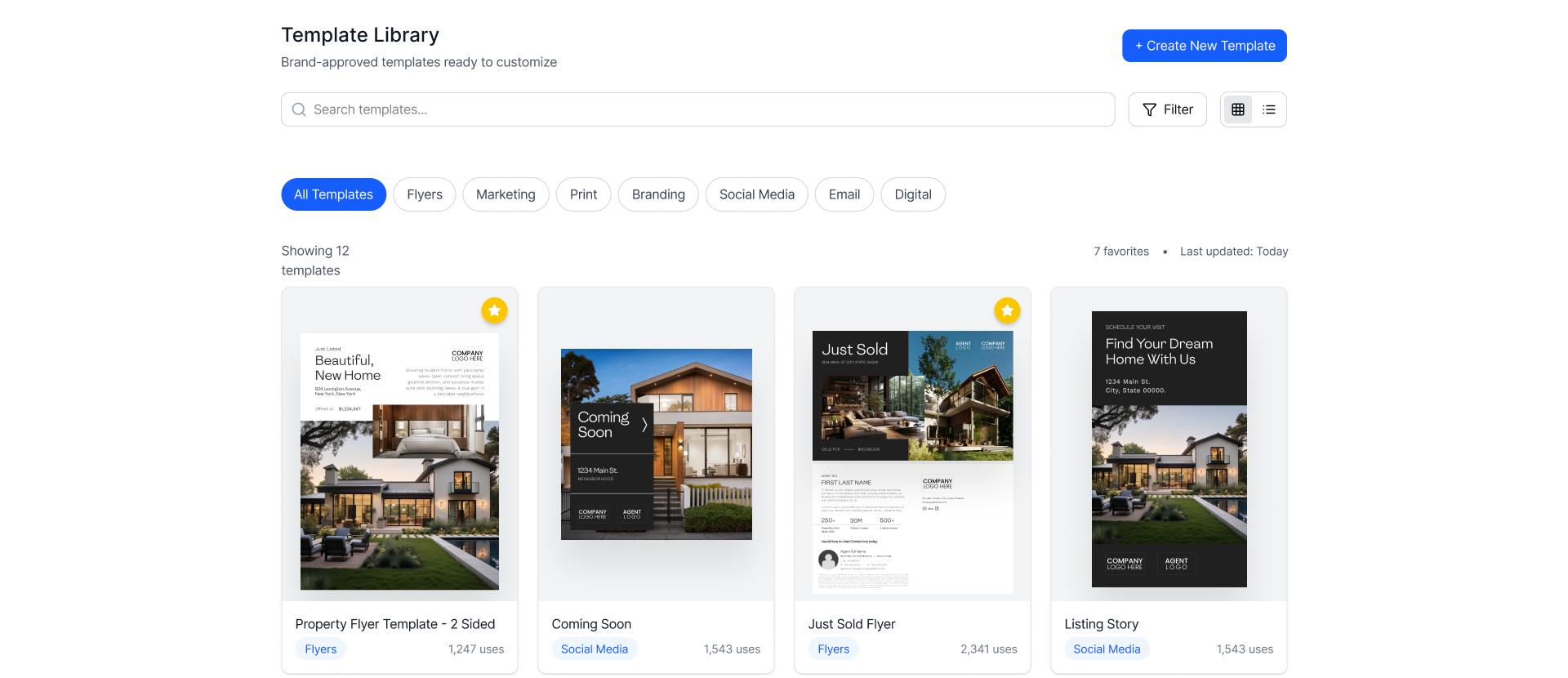
Centralized template libraries allow agents to pull assets from a single, always-up-to-date source whenever they need to market a listing or launch a campaign. By using a centralized library of templates that houses master templates, users don’t have to start from scratch or hunt down the latest files to ensure compliance with the franchisor's rules.
On the other hand, franchises can standardize layouts and brand elements at the top level without putting a stop to local edits. With such a structure in place, there is no unnecessary back-and-forth with marketing teams, and it cuts down on repetitive design work.
Types of Marketing Assets Franchises Use Frequently
Franchise marketing relies on a consistent set of repeatable assets that agents and offices use every day. Here they are:
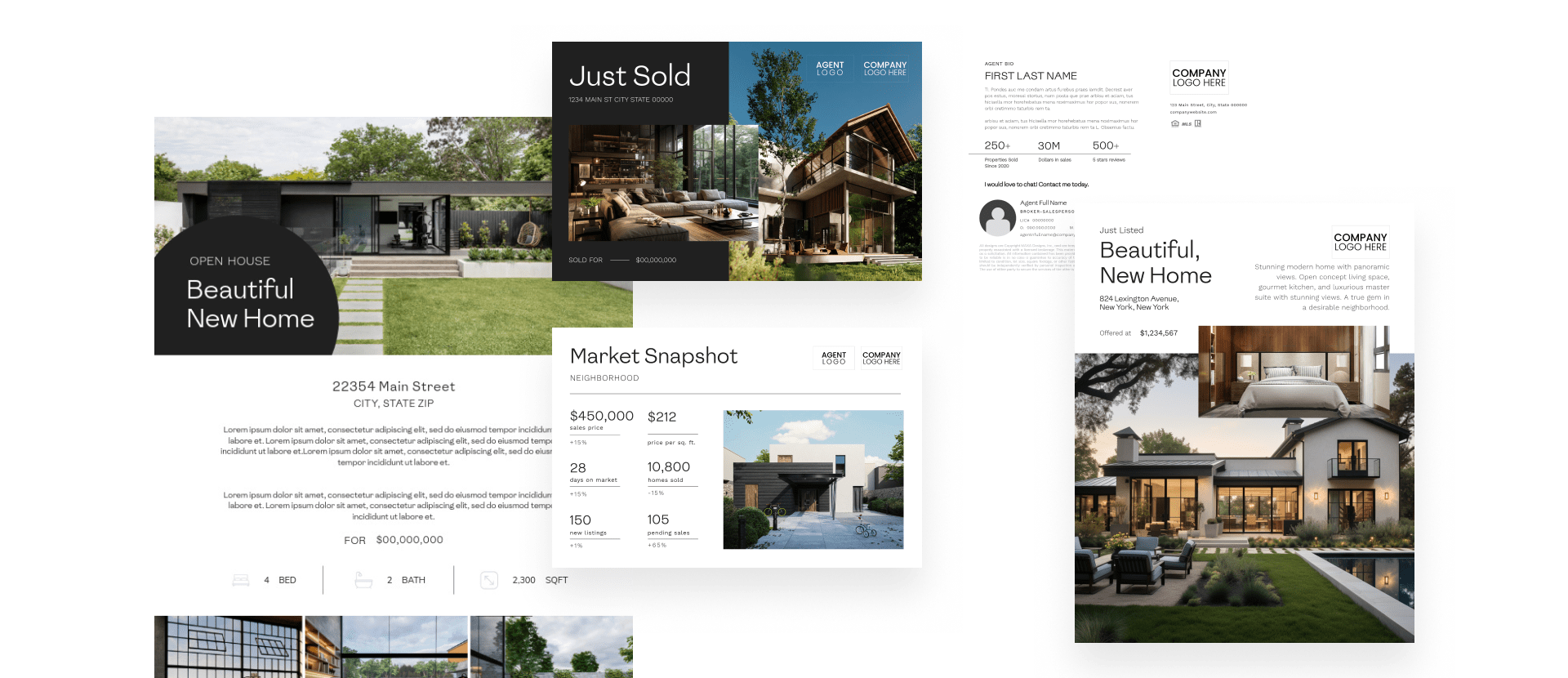
- Listing flyers and brochures: Flyers and brochures provide the core information about any property for sale or lease, making them the most critical marketing asset. Despite the importance, flyers can easily get off-brand and probably do so the most.
- Social graphics for agents and offices: Typically feature listings, just-sold announcements, branding posts, and local promotions.
- Email campaigns and newsletter layouts: Real estate email marketing provides a structured channel for promoting listings, market updates, and ongoing client communication.
- Video and social reel templates: Short-form video layouts for property highlights, agent branding, and social engagement.
- Print and direct mail formats: Real estate printing services often include booklets, business cards, mailers, signage, and leave-behinds, all of which require strict brand and compliance controls.
How Marketing Automation Helps Franchises Scale Output
Marketing automation reduces the manual effort that slows franchise teams. It can auto-populate listing details, agent profiles, and contact information directly into approved templates.
This functionality takes repetitive updates out of the equation and minimizes errors, especially when the same listing needs to appear across multiple formats and channels. At the franchise level, automation enables the creation of large volumes of marketing assets across offices, regardless of how many agents customize the design.
The result is uniform messaging, adherence to brand standards, and allowing agents to focus on selling instead of rebuilding marketing materials.
How MAXA Supports Centralized Franchise Marketing
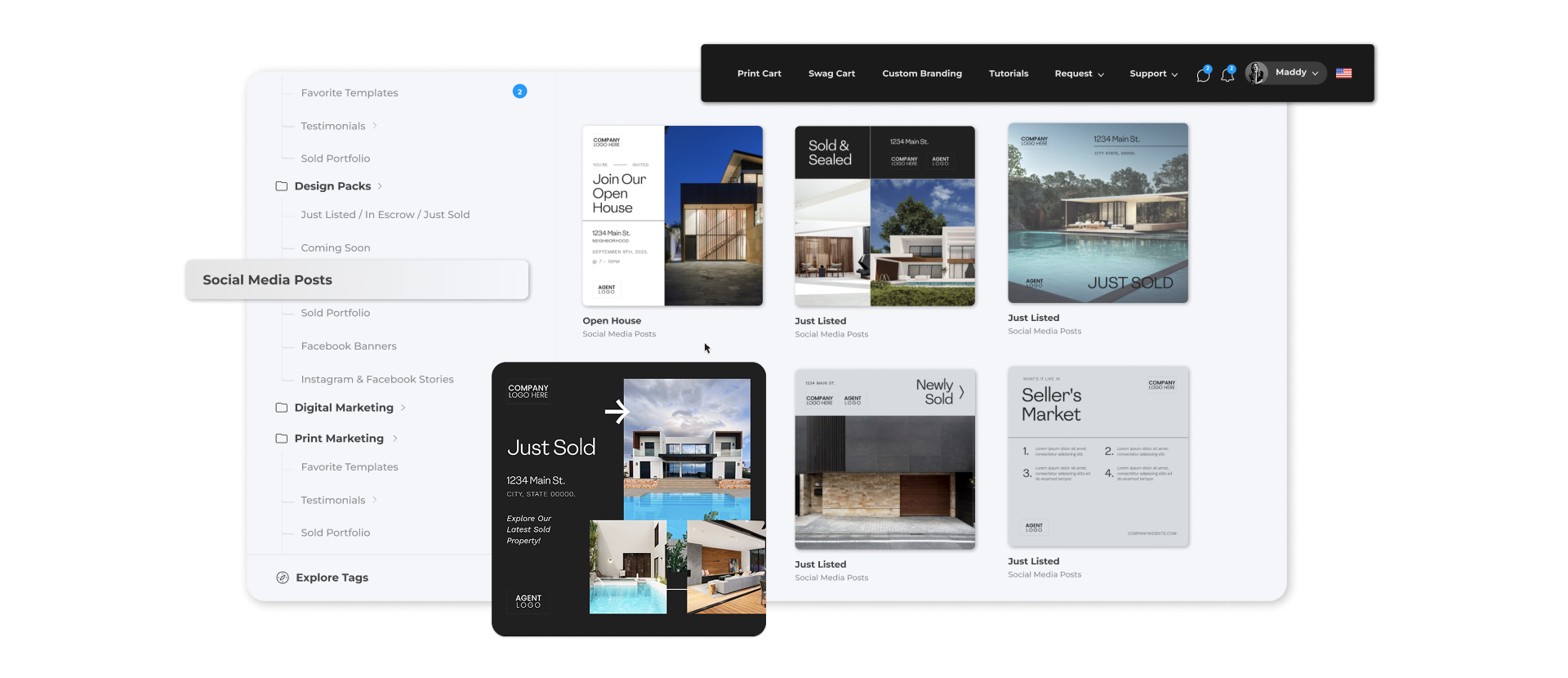
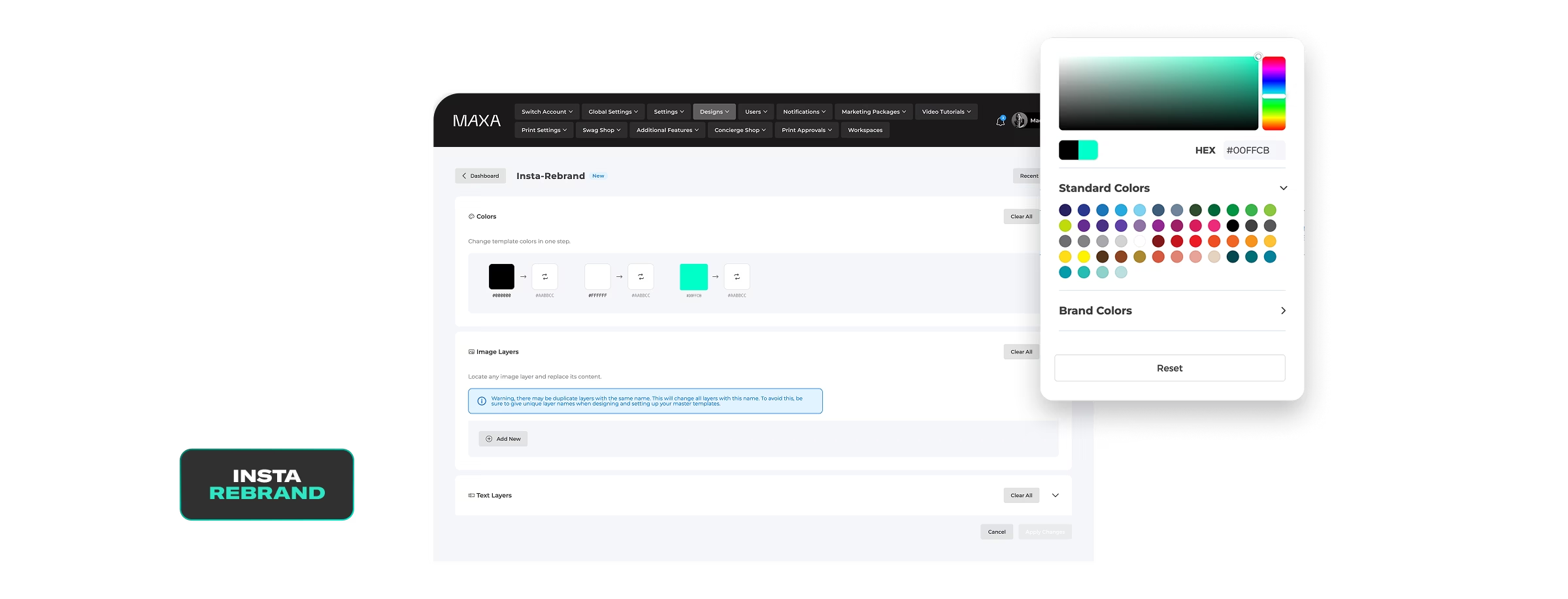
MAXA is one example of how franchises can operationalize centralized marketing. Templates are created from designs the franchise has already approved, then organized into structured categories so agents can quickly find and use the right materials.
These templates function as automated frameworks thanks to their innovative functions. Information like agent branding, MLS property data, testimonials, user details, team and DBA branding, co-partner information, and pricing scenarios can be pulled in automatically. This reduces manual updates and ensures consistency across offices.
The locking rules take care of compliance and control. Brand assets such as logos, fonts, colors, imagery, disclaimers, and licensing language can be locked, while other elements remain editable. Permissions and restrictions can be adjusted by the DBA, team, or user, allowing franchises to enforce standards while still supporting local execution.
Implementation Framework for Franchise Marketing Teams
Rolling out franchise marketing systems is not a one-time project. It’s a continuous process that adapts and scales with your business. That process starts with the proper framework. Here’s how to implement it.
- Build the brand system and style standards: Define visual identity, messaging rules, disclaimers, and compliance requirements that apply across the franchise.
- Create a franchise template library: Develop master templates for the most commonly used marketing assets and organize them for easy access.
- Lock brand-critical elements: Protect logos, colors, fonts, layouts, and required language, while allowing controlled customization where needed, excluding items not crucial to the brand and legal compliance.
- Train franchisees and agents on usage: Focus on how to use the system efficiently, not just on the rules, to bolster template adoption.
- Update templates as the brand evolves: Refresh templates periodically to reflect any new branding, compliance updates, or other changes.
Final Thoughts: Franchises Grow Faster With the Right Marketing Structure
The more your workflows are streamlined and automated, the easier it will be for your franchisees to stay on-brand. Instead of control being imposed on franchisees through a centralized system, it will feel completely natural and part of day-to-day operations.
With MAXA’s centralized portals, all the marketing assets franchise teams need to customize listings with ease and stay compliant are found in one place, ready to be published in a matter of clicks. Book a demo with MAXA to see how your franchise can benefit from its perks.