For many marketing teams, the demand for new materials can outpace the capacity of their design teams, especially during busy seasons. According to the Content Marketing Institute, 39% of B2B marketers say creating enough content is their biggest challenge. This problem applies even more in real estate, where every listing requires multiple assets.
As a result, real estate marketing teams may spend more time producing repetitive materials than focusing on strategy, while agents turn to DIY tools that lead to off-brand or inconsistent designs.
The good news is that you don’t need to hire more designers to keep up.
Instead, you can incorporate the right systems to automate realty marketing operations and give agents what they need in minutes.
Here’s how it works.
Why Your Design Team Is Stretched Too Thin
Real estate is an industry where visual identity matters significantly. Creating content that converts is challenging, while producing enough of it is even harder. Every listing generates a long list of marketing materials, such as:
- Flyers
- Postcards
- Social graphics
- Email headers
- Etc.
What’s more, almost all of them require updates as prices change, photos get swapped, or open house dates shift. For many teams, “Can I get this by the end of the day?” becomes a daily routine instead of an occasional request.
The problem for real estate design teams isn’t creativity but volume. Designers spend most of their time refreshing the same just-listed flyers, updating just-sold postcards, or resizing another set of social graphics.
These tasks are essential, but they’re repetitive and low-impact. Instead of focusing on new designs that improve conversions or strategic campaigns, your design teams get pulled into a never-ending cycle of production work.
Hiring more designers might feel like the solution, but it rarely fixes the core issue.
The Problem With Scaling Creative Manually
When marketing teams start to feel overwhelmed, the first instinct is usually to hire more designers. While that might provide temporary relief, it doesn’t fix the real underlying issue.
The simple truth is that real estate creative work is not hard because it’s complex, but because it’s repetitive. Adding more people doesn’t decrease the volume of work; it just increases your costs.
As a brokerage grows, this approach may become unsustainable. A team that handles 50 agents today may need to handle hundreds next year, and design requests scale exponentially. For example, eXp Realty went from a few thousand agents in 2017 to 85,000+ in 2022. This illustrates how quickly creative demand can multiply when agent numbers surge.
When this happens, hiring more creatives won’t work. Every office may end up with its own designer, each producing the same flyers, postcards, and socials, with small variations that lead to inconsistent branding across locations.
At this point, the problem is in the system, rather than in the headcount. Without a smarter, centralized way to produce marketing materials, design teams will struggle to keep up with the volume or maintain consistent quality.
What Design Automation Actually Means (It’s Not DIY Canva)
.png)
When people hear automation, they often picture agents making their own marketing materials in Canva. But in a professional real estate marketing setup, true automation keeps brand control with the marketing team, not the agents.
The power of real design automation lies in pre-approved, locked-brand templates. To begin, marketing leaders should define the key elements, such as:
- Layouts
- Typography
- Colors
- Spacing
- Compliance elements
These elements should then be locked so they can’t be changed. Agents will only be able to interact with editable fields like photos, property details, or their contact details, without the ability to affect the design.
Using automation also means that the system can handle any repetitive work. For example, agent names, headshots, phone numbers, brokerage details, office addresses, and legal disclaimers can auto-populate into every template. Listing data can also be pulled directly from your MLS or listing entry.
To produce new marketing materials, agents can simply drag and drop elements that are important for each listing. This way, the content changes while the template stays the same.
In contrast, in Canva-based setups, agents control fonts, colors, layouts, and compliance fields, increasing the risk of inconsistent branding. And once those DIY flyers or postcards are printed, the mistakes are permanent.
With real design automation, you avoid these risks because agents can send materials to print directly from the platform, allowing you to control the final output before production.
What You Can Automate Today (Without Sacrificing Quality)
Most of the materials agents request each week follow predictable layouts and repeat the same brand elements, making them ideal for automation.
Here are the types of materials that can easily be automated with pre-made templates without sacrificing quality, engagement, or conversions:
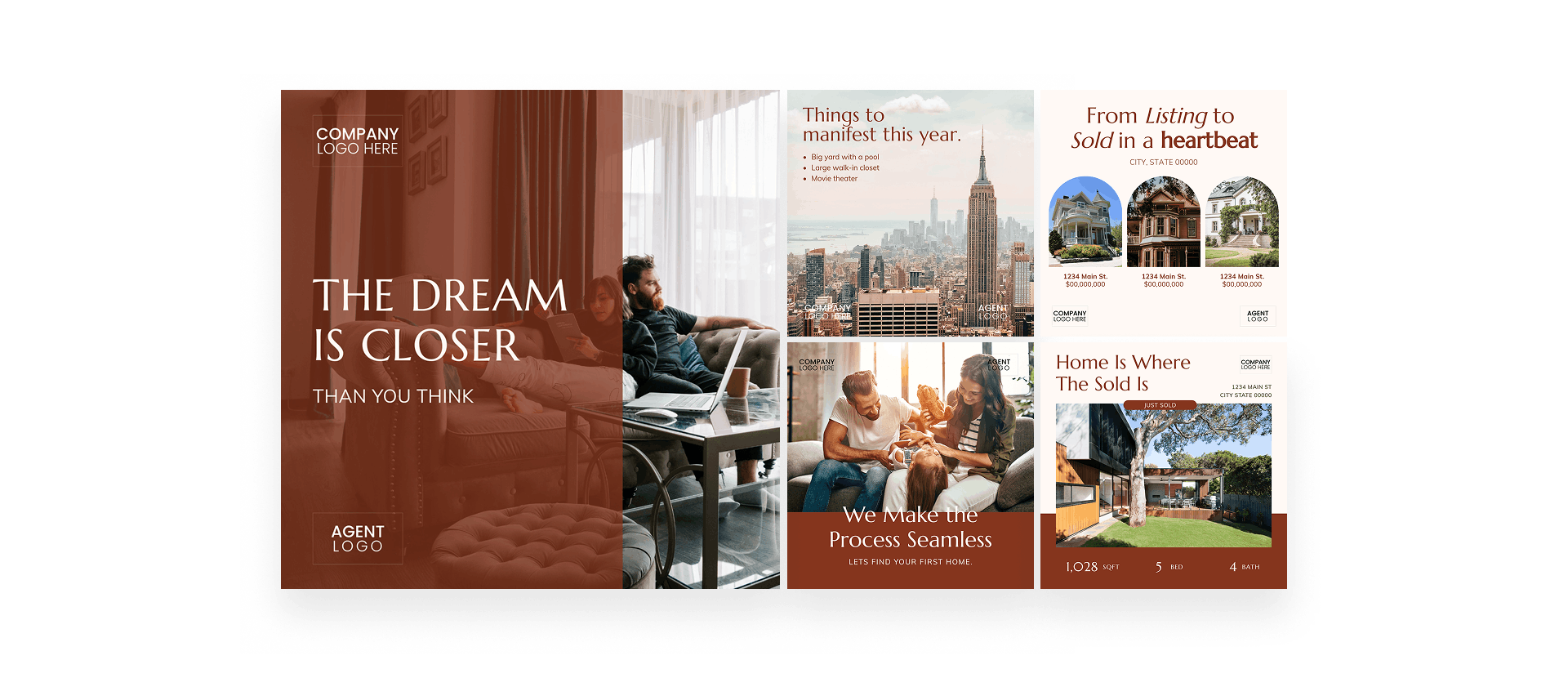
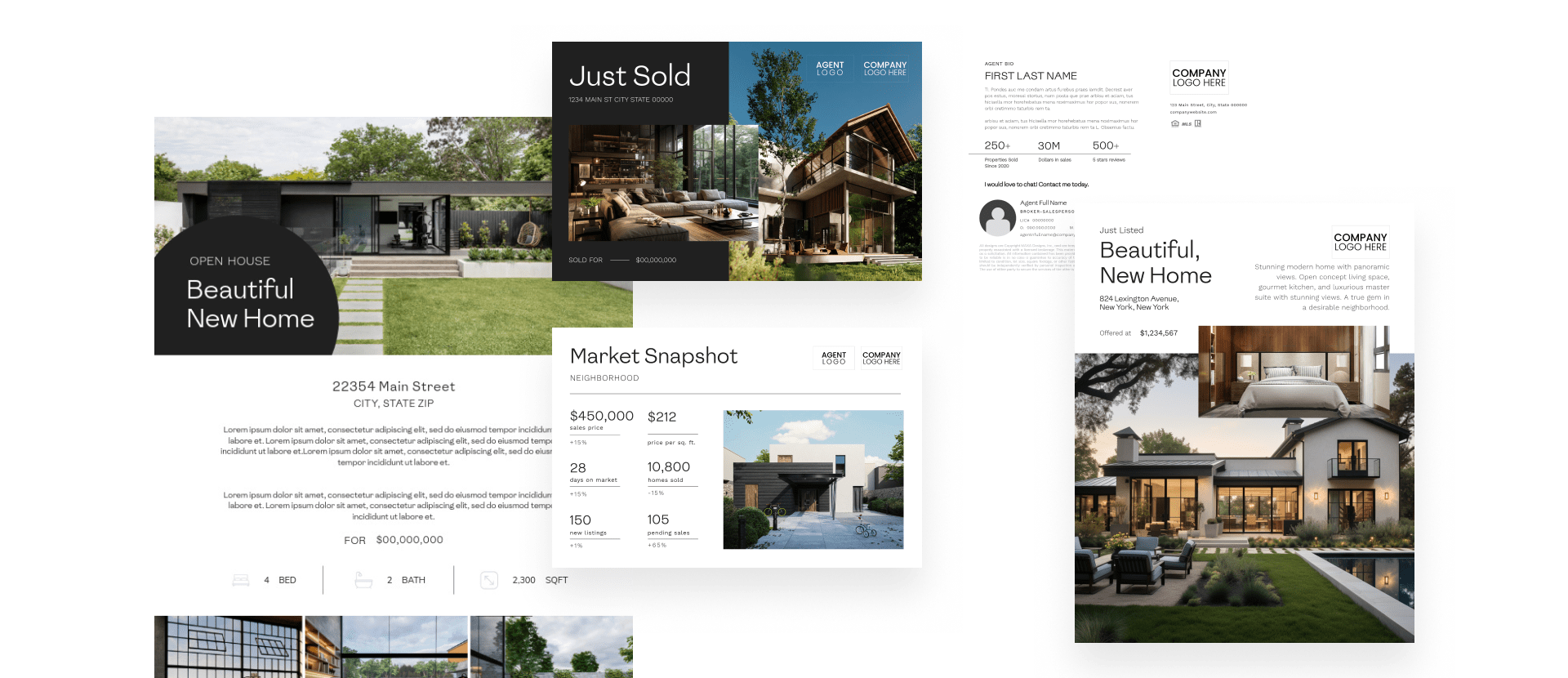
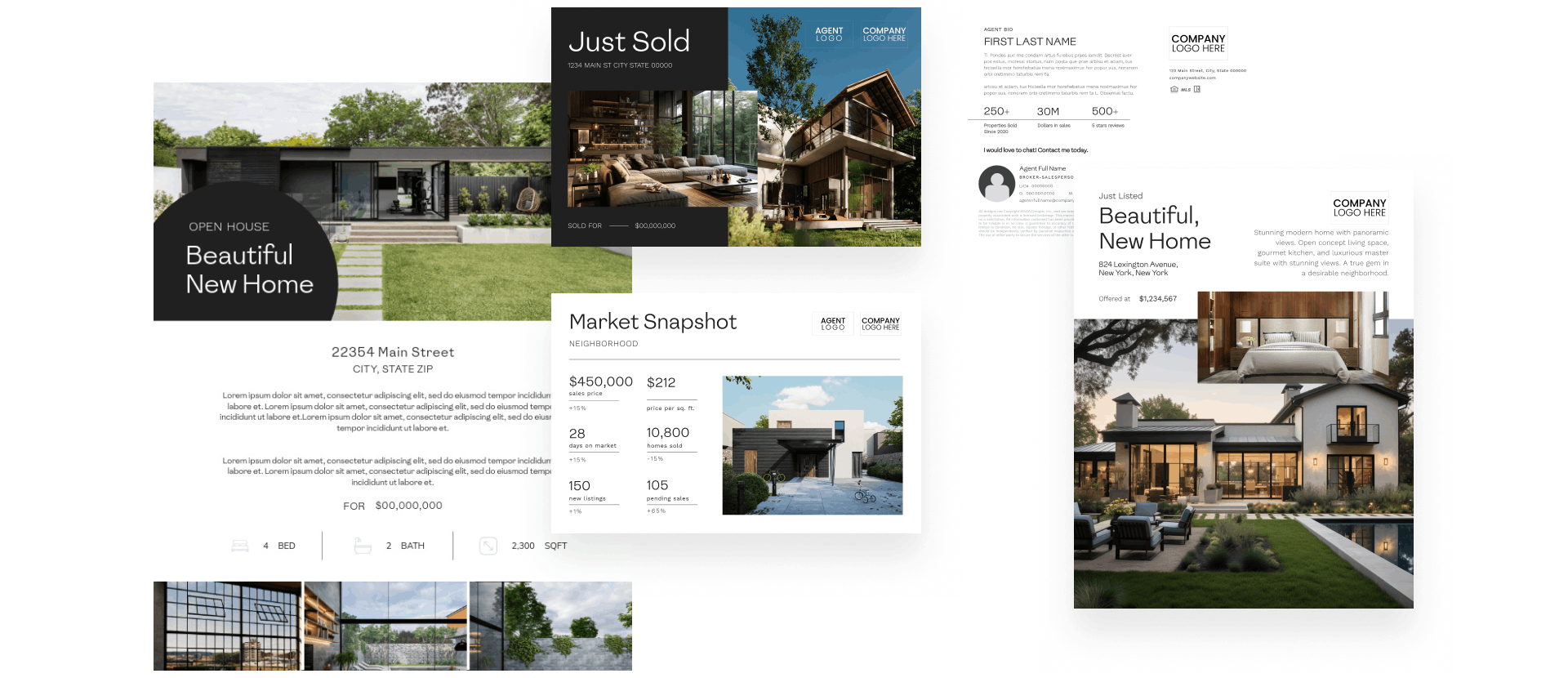
- Property flyers: These are easily automated with locked layouts for headlines, hero images, features, agent info, and disclaimers. Listing data and photos can auto-populate, so agents can generate a flyer as soon as the property is imported into the MLS.
- Just listed / just sold postcards: Typically follow a simple structure with one main photo, a short message, and a CTA. Templates let agents update only the address and images while keeping every postcard consistent and print-ready.
- Instagram & Facebook post graphics: Square and vertical layouts for new listings, open houses, price updates, and sold announcements can be standardized so agents only swap photos and basic details.
- Stories & reels templates: Vertical formats need defined brand elements like logo placement, colors, and text overlays. Everything else can be modified. Agents can simply drag and drop listing photos or clips without altering the design.
- Email graphics: Email headers for open houses, newsletters, and market updates follow repeatable patterns. Automated templates pull in agent details and listing data to keep every email marketing initiative visually consistent.
These are the most common assets, but you can also automate open house invites, price reduction graphics, market updates, agent announcements, brochures, digital ads, and even business cards.
How Brokerages Use MAXA to Automate at Scale
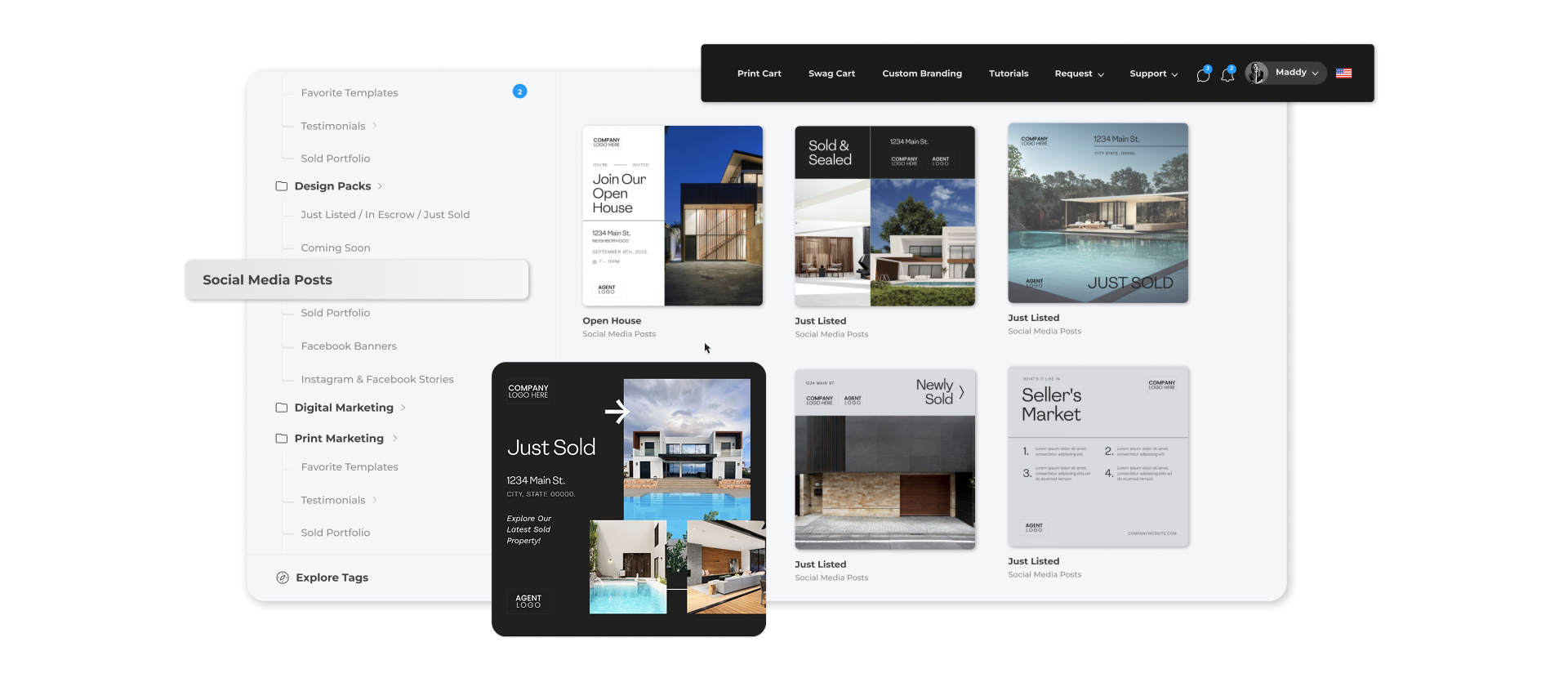
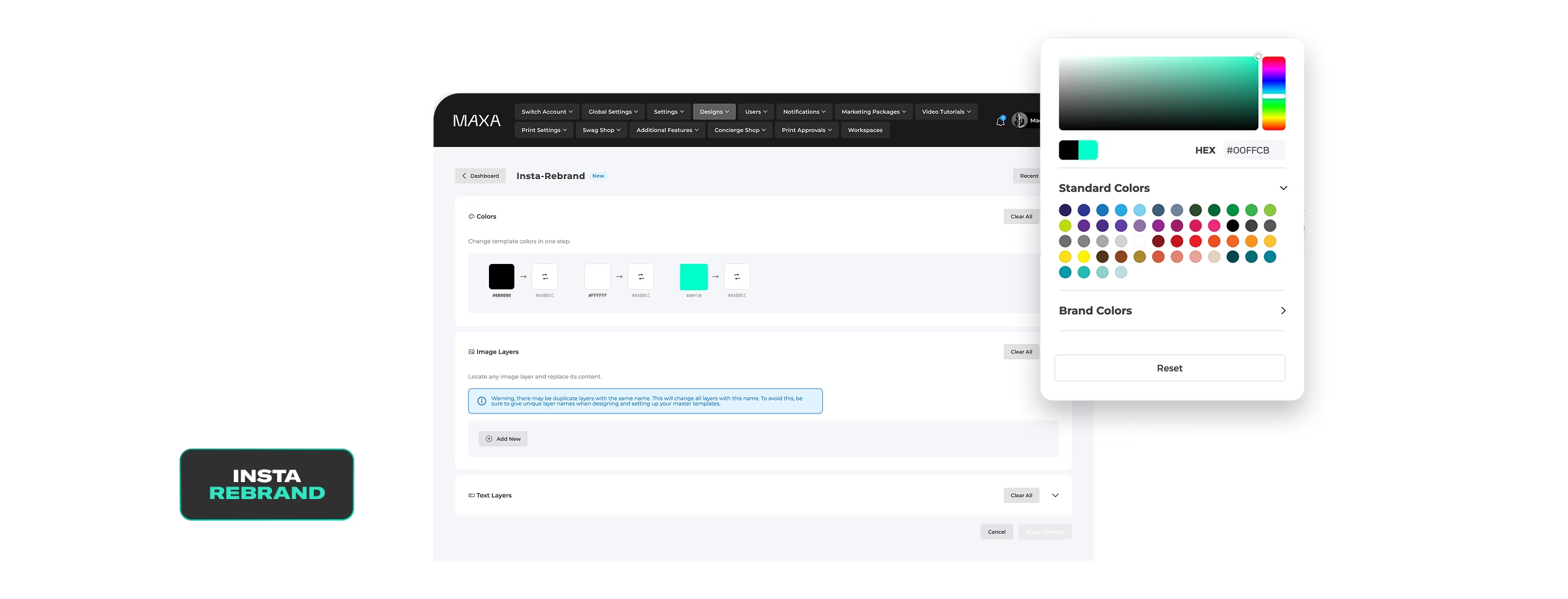
MAXA is built specifically for the types of challenges real estate marketing teams face every day. Instead of relying on scattered tools or manual production, brokerages use MAXA to centralize workflows, automate repetitive creative work, ensure consistent branding, and give agents the ability to quickly produce high-quality materials.
By using MAXA, marketing teams can create custom templates for every brand, sub-brand, and even office, ensuring each team member has access to the right designs. These templates come with built-in brand protection, meaning that fonts, colors, layouts, spacing, and compliance elements are locked. Agents can still personalize their materials, but they can’t break the design.
The platform also supports true agent self-serve, so agents can generate materials from the templates on their own. They can then send them to print directly from MAXA, while management can oversee and authorize the final result. Also, if a brand-wide design change happens, like a logo update, MAXA pushes those changes across all templates instantly. That way, all materials are updated and synced simultaneously.
One brokerage that recently adopted MAXA has been handling more than 300 manual design requests each month, most of which were simple updates. After moving their templates into MAXA, those requests dropped by more than 75% in the first month.
Here’s what others have achieved:
- Realty Austin successfully transitioned over 360 agents from Canva to MAXA, streamlining its design processes.
- Ebby Halliday’s agents created 13,000+ marketing assets autonomously using MAXA.
- For Sotherby’s, MAXA is the most widely adopted tool they’ve ever provided to their 1,000+ agents.
The ROI of Design Automation
Design automation saves time for your marketing team, but also creates measurable business value. By automating repetitive production work, listings go live faster, agents become more efficient, and leaders can finally focus on marketing strategy.
In practice, automation allows agents to generate marketing materials the same day a listing hits the MLS. That speed helps listings gain early traction, increases visibility, and makes agents more competitive.
Agents who can get the marketing materials they need within minutes are also more satisfied with their brokerage. This improves retention, strengthens loyalty, and reduces turnover.
On the other hand, the marketing team can prioritize branding, campaign development, and long-term growth initiatives. For example, Berkshire Hathaway saved 2,267 design hours in three months with MAXA, which is valuable time they redirected toward higher-impact creative work.
In short, automation pays off quickly and allows brokerages and marketing teams to scale quickly without hitting production bottlenecks of low-level daily tasks.
Final Thoughts: Creativity Scales When Busywork Doesn’t
Real estate marketing typically falls behind because valuable time is spent on repetitive production work instead of strategic initiatives. Hiring more designers won’t fix that. Instead, automating the materials agents need every day is what frees your team to focus on strategy, branding, and creative work that helps grow the business.
Therefore, for marketing leaders looking to scale without burnout, the path is smarter systems, not bigger teams. Book a demo to see how MAXA helps real estate marketing teams automate more and stress less.