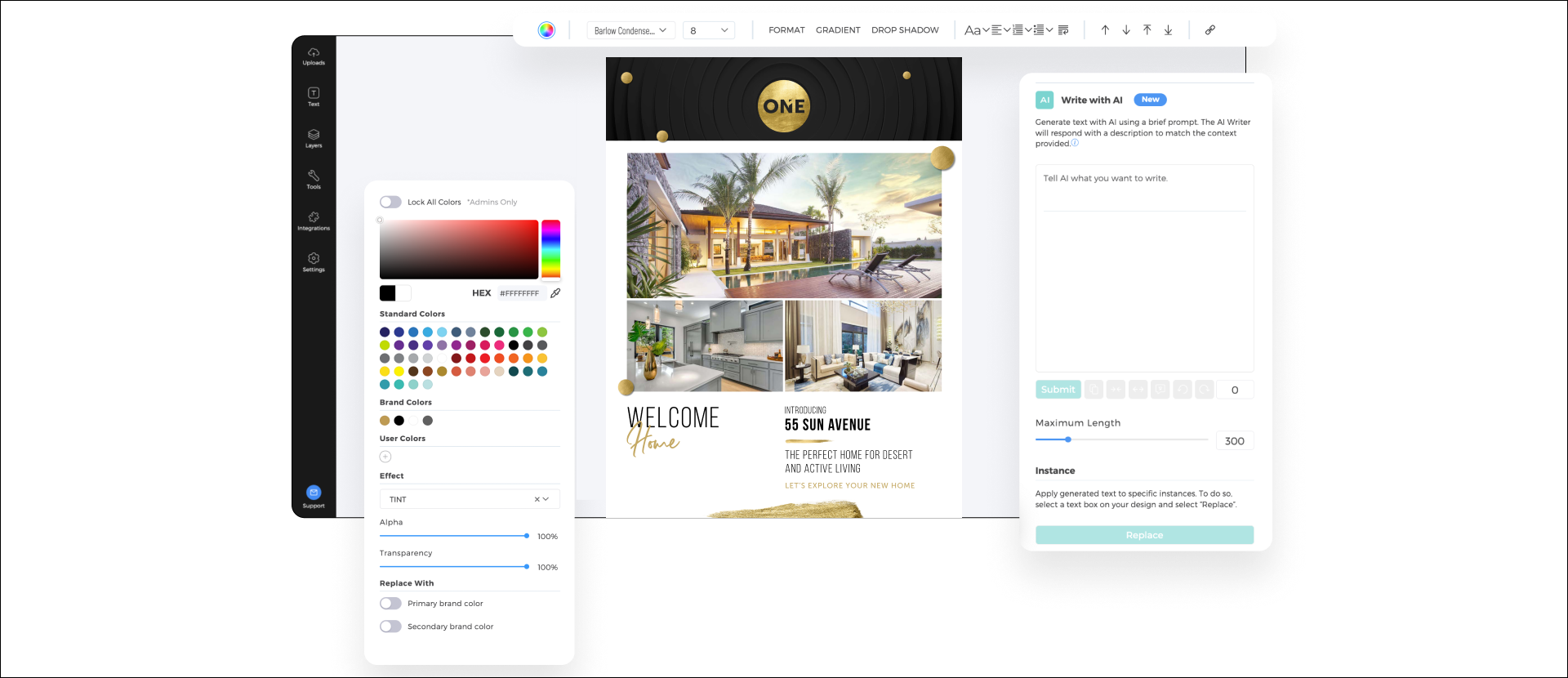
For real estate marketers and companies, the real question is how well design and templating platforms perform day to day. No fancy gimmicks. Just reliability, ease of use, and efficiency. That’s the name of the game.
In this article, we have a heavyweight bout of Marq vs MAXA, where we’ll focus on features, workflows, and real-world fit for agents and brokerages. The goal is to identify where each platform excels, where it can be limiting, and which types of teams it best serves.
Platform Overviews: What Marq and MAXA Are Built For
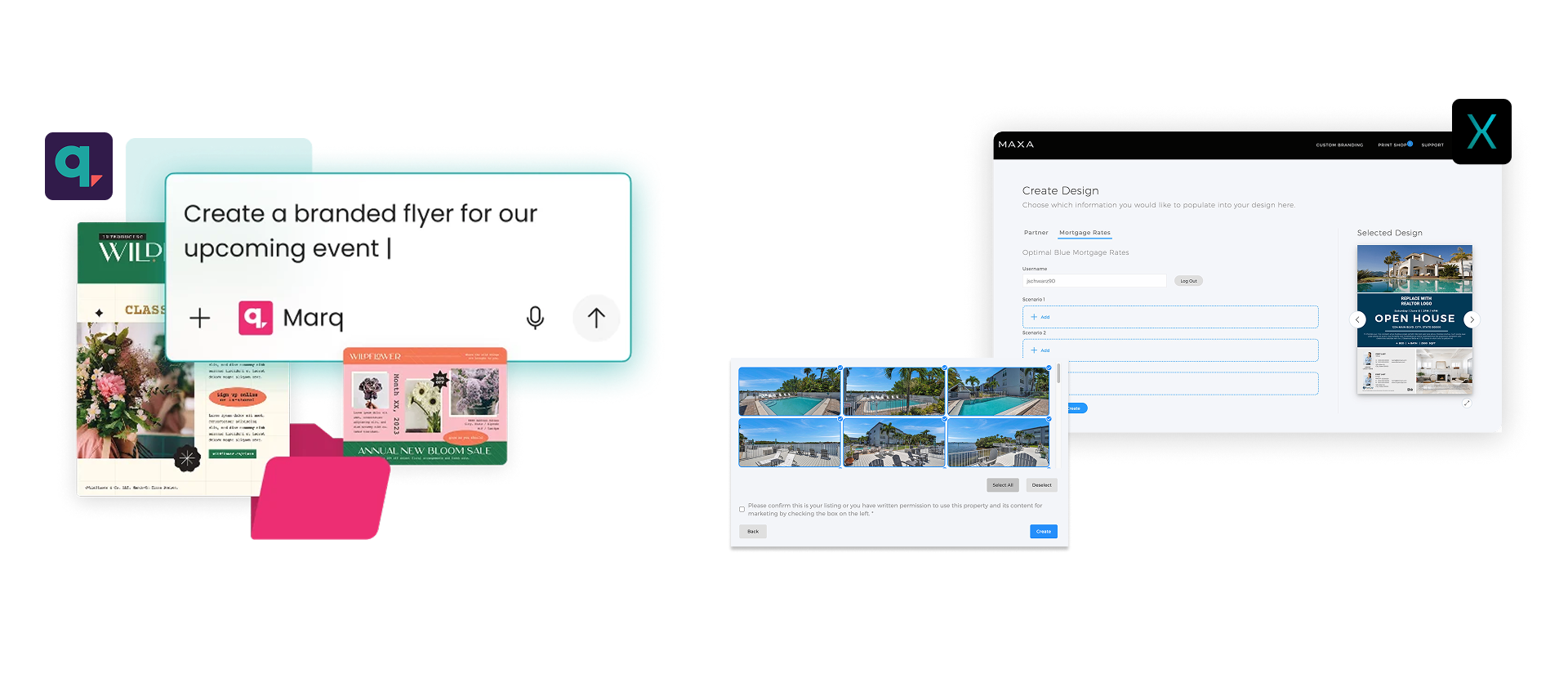
The key aspect of our Marq vs. MAXA comparison is understanding the goal of each platform and who they are for.
Marq Platform: An Overview
Marq is a brand-templating platform that scales on-brand content creation through features and systems, including Locks; access to a specialized AI market with apps that help with bulk on-brand content creation and real estate marketing automations; a drag-and-drop editor; APP integrations; and more. Marq serves over 100 verticals, from higher education and banking to real estate, with reusable templates for flyers, social media posts, and more.
MAXA Platform: An Overview
On the other hand, MAXA is a robust design platform specifically designed for the real estate and mortgage industries. Through its specific real estate design features, including the creation of different templates with direct MLS property data integration and market stats, automated creation of custom designs, third-party app integrations, and web-to-print services, MAXA becomes the only design and marketing tool professionals need.
Real Estate Focus: Horizontal vs Industry-Built
One of the biggest differences between Marq and MAXA is how central real estate actually is to each platform's core business model and, therefore, identity.
Marq: The Horizontal Approach
Marq approaches real estate as a dedicated industry solution within a broader, horizontal platform. Its Real Estate offering includes MLS integrations, data mapping, template locking, and agent-accessible libraries, all designed to address common brokerage bottlenecks.
Here, we are talking about reducing repetitive design requests by giving agents pre-approved templates they can personalize quickly, while admins maintain control over brand standards.
MAXA: Real Estate at the Core
MAXA, on the other hand, is built almost entirely around real estate and mortgage marketing as its core use case.
All of its tools and features, from MLS-driven automation and contact info auto-population to compliance guardrails, web-to-print, and others, stem from the company’s exposure to agent and brokerage operations. The key difference is the focus.
Marq offers a product in which real estate is a layer, whereas MAXA places the challenges these real estate professionals face at its core and designs its platform to solve them.
Template Libraries and Types of Assets
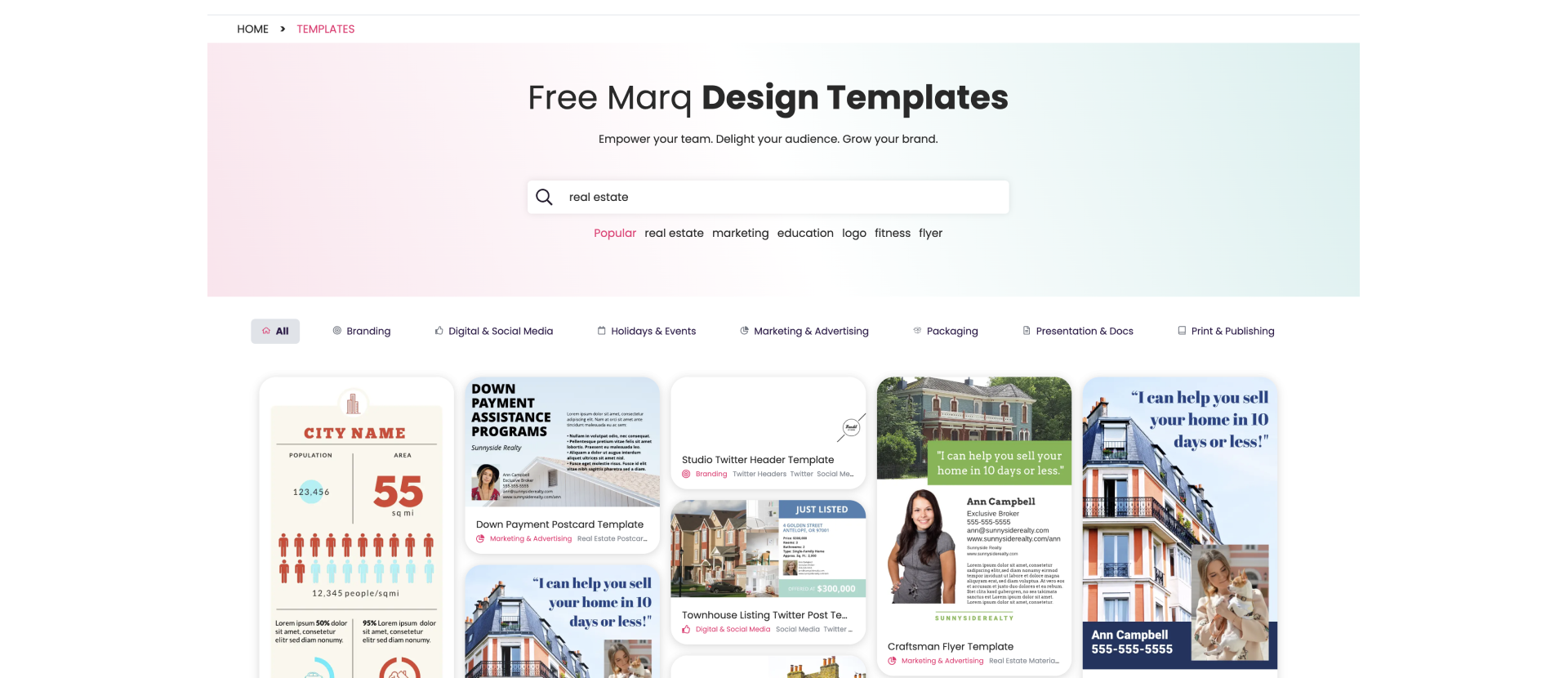
Both Marq and MAXA are fundamentally template-driven platforms, but they organize and deliver templates in entirely different ways.
Marq Templates Library
Marq focuses on reusable, approved real estate marketing templates that agents can adapt for individual listings.
Here’s how it looks on the backend: From the homepage, users can access Marq’s open template library by clicking on the Marq templates bar. Then, on the left, there are plenty of filters at your disposal, from the type of marketing materials to filtering based on the type of device you intend to use.
In addition to these open Marq templates, organizations can create Brand Templates that are shared with agents, alongside personal templates users build for themselves.
MAXA Templates Library
MAXA takes a more structured, real estate-specific approach and does more than just offer individual templates in isolation. MAXA’s focus is on marketing themes, each comprising more than 300 templates across various assets. These templates span social, print, email, video, recruiting, and listing marketing, and you can fully customize them for each brand, with the logos, colors, fonts, disclaimers, and compliance rules baked in from the start.
Both platforms provide agents with templates they can use. Marq emphasizes open access and adaptable designs across many categories, while MAXA leans into real-estate-specific template suites designed to give agents and brokerages more options, consistency, and speed.
Brand Control: Lockable Templates on Both Platforms
Brand control is where Marq and MAXA are more similar than different. Both platforms enable marketing teams to lock down critical brand elements while still providing enough breathing room for agents to customize what they need.
Marq Lockable Templates
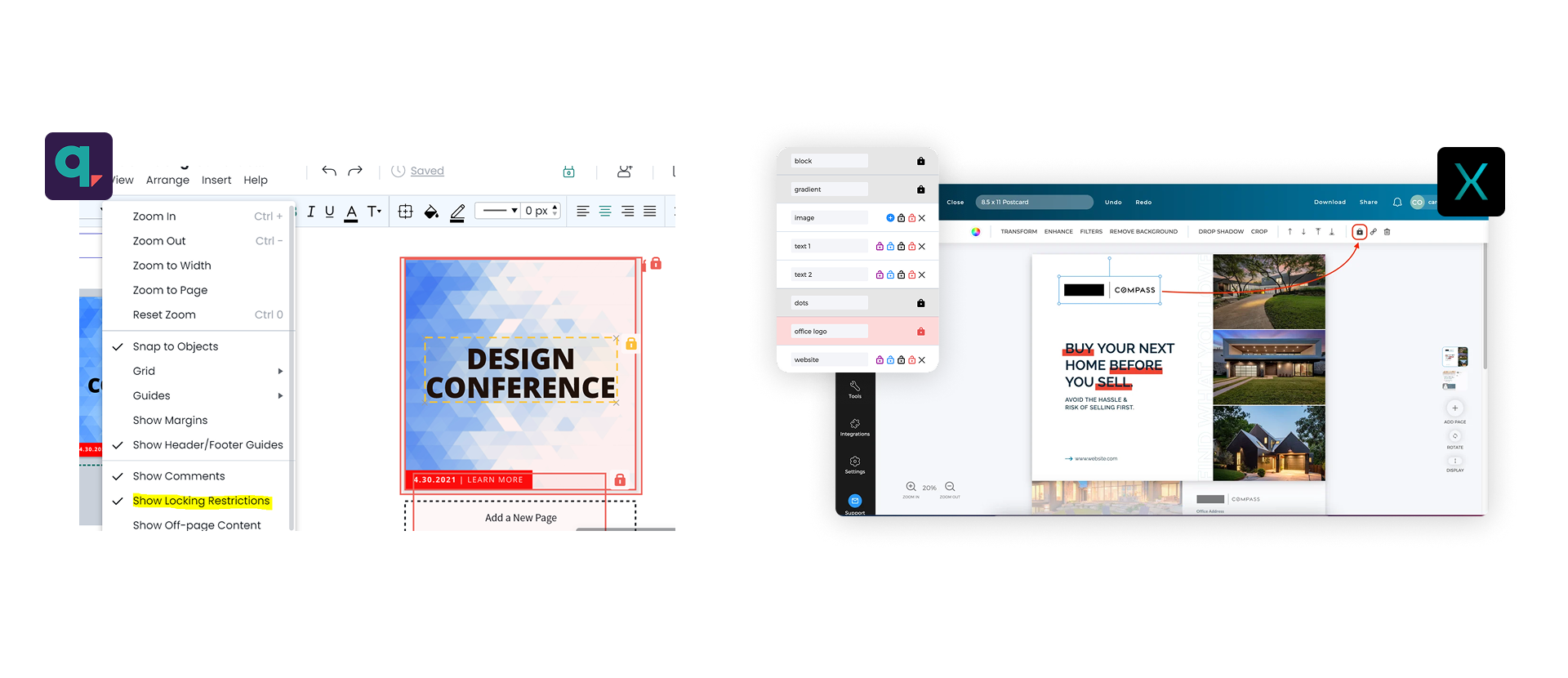
Marq has developed a system called Locks. Users can apply locks to documents they create from a blank project and not template copies, so there’s no chance of items getting locked without the admin’s oversight.
There are three levels of locks with Marq:
- Project level: This locking feature applies to the entire project (prevents deletion or adding pages to the project)
- Page level: This lock prevents adding content to a specific page, its deletion, and allows for locking of specific properties and settings
- Asset level: This lock prevents changing of a text box, shape, or image on the page
MAXA Lockable Templates
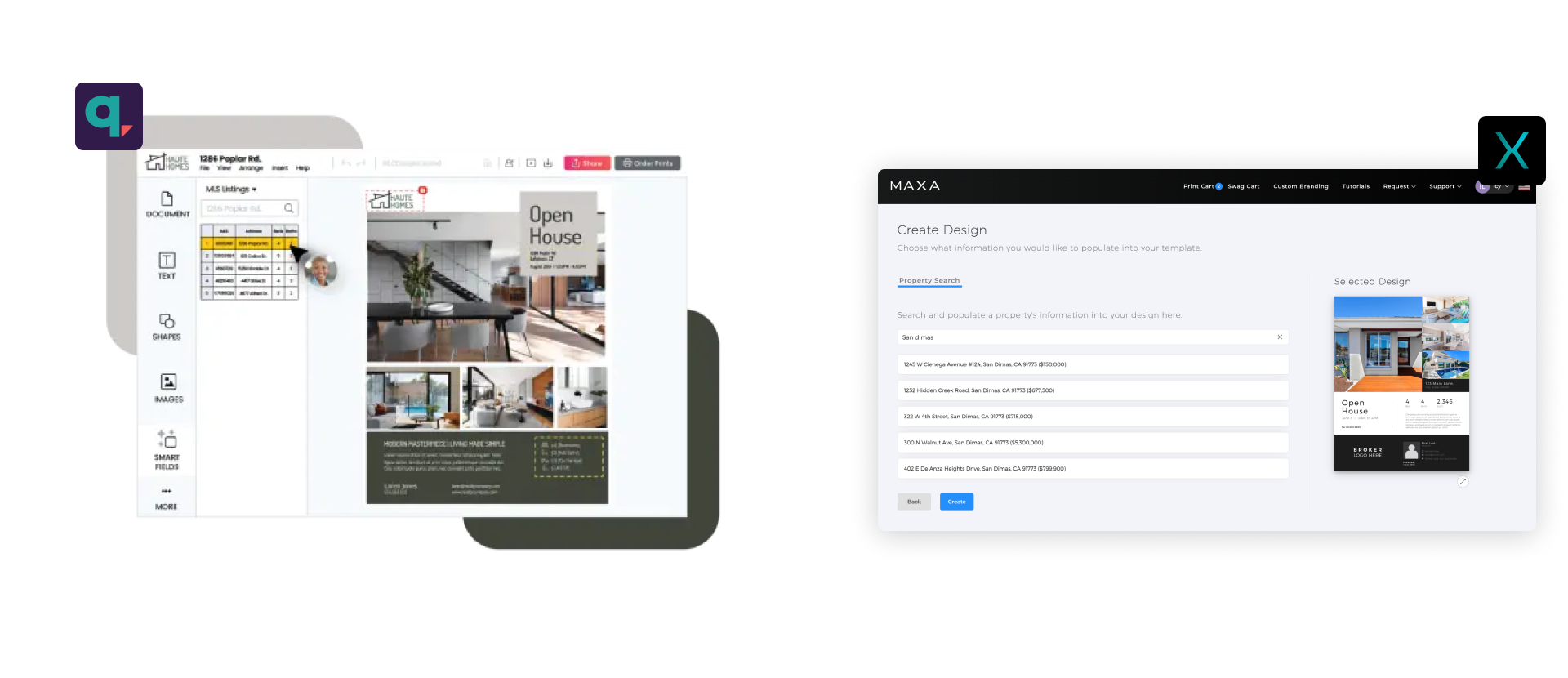
MAXA takes a more granular approach to locking elements. It allows admins to lock down layers, content, and brand assets (logos, fonts, colors, imagery, disclaimers, licensing details) and even vary restrictions by DBA, team, or individual user. There are multiple lock behaviors here as well:
- Red lock: Fully locked elements that only admins can modify, best used for brand and compliance components
- Gray lock: Elements are locked to keep things simple, but users can unlock them when flexibility is warranted
- Blue lock: The Blue lock is for locking text fields, where users can still edit them, but not move them around and break layouts
- Purple lock: For elements that can be edited or resized but not removed from the template
- Yellow lock: The Text Box Element that prompts agents when key information hasn’t been updated.
Both platforms offer efficient element locking, but MAXA delivers more real estate-specific guardrails that keep agents compliant and in check.
Data & MLS Integration: Turning Listings into Marketing
Marq and MAXA place significant emphasis on data and MLS integration capabilities, as these are crucial to scaling.
Marq MLS Integration
Marq’s Real Estate solution features MLS integration that enables agents to turn templates into custom listing marketing with a single click. To do that, the integration will pull listing data, addresses, and images directly into the templates, so there’s no need for any manual entries.
MAXA MLS and Data Integration
MAXA also integrates with MLS and industry data, applying them within a real estate-first marketing environment. Templates can be configured to automatically replace image placeholders with property photos and populate listing details in a specific order.
Here’s how it works in practice: Once you select the template and start to edit it on MAXA’s platform, you just need to choose the address of the property, and it will pull the info directly from the MLS, including property description, price, square footage, and more. You can select up to four images, and the listing will be ready.
The MLS data is best used alongside MAXA’s broader automation and compliance service that includes automation of social media packages, testimonial packages, and more.
Automation and Scale: How Each Platform Handles Volume
To an extent, both MAXA and Marq treat manual work as an enemy, especially when it comes to things that can be automated.
Marq Automation Capabilities
Marq frames automation around smart templates and data-driven content. Admins can connect data sources, including CSVs, Google Sheets, XML, or MLS feeds, to Smartfields, which auto-populate templates with listing, agent, or company data. With features such as dynamic resizing, formulas, DAM integrations, and event-driven AI workflows, large organizations can trigger, update, and distribute content with minimal hands-on effort.
MAXA Automation Capabilities
MAXA’s automation is designed to ensure real estate marketing content is produced efficiently and at scale. First up, admins identify recurring marketing items, lock down brand and compliance rules, merge MLS and industry data, and then generate automated marketing packages like listings, social campaigns, recruiting, market stats, or onboarding in bulk.
Those packages are delivered directly to agents via email, where associates finalize, publish, print, or distribute content without starting from scratch. This kind of automation is perfectly aligned with large brokerages and franchises that want real-estate-specific marketing packages deployed consistently across hundreds or thousands of agents.
Implementation & Use Cases for Real Estate Teams
Let’s check out actual use cases for both platforms when it comes to real estate.
Marq Real Estate Use Cases
Marq makes sense for organizations that want a single brand-templating system to serve multiple business units. For example, a parent company with a real estate arm alongside other divisions. It’s well-suited to teams that already rely on DAMs, CRMs, and cross-industry workflows and want to integrate a design system into their existing ecosystem.
MAXA Real Estate Use Cases
MAXA tends to resonate more with brokerages and franchises that want marketing to run like an operating system. A good example is MAXA's work for Baird & Warner, one of Chicago's best-known real estate companies.
Within months of rolling out MAXA, they streamlined workflows, automated listing packages, and unified branding across 28 offices. Adoption skyrocketed to 75% brokerage-wide in six months. What their agents highlighted as particularly efficient were the automated packages, which cut support requests by 80%.
In essence, Marq works when real estate needs to plug into a larger marketing ecosystem. MAXA shines when brokerages want automation, consistency, and scale built specifically around how agents actually work.
Pricing & Buyer Fit
Marq uses a license-based model, where every admin and user needs a seat to create or use templates. It starts with a free plan for individuals, then scales through Pro and Team tiers at a per-user monthly rate. For the Enterprise level, which includes more design imports, unlimited automations, a custom approval workflow, and more, you’ll need to request a custom quote.
On the other hand, MAXA’s approach to pricing is completely different. It is aligned to brokerage size and production scale, not individual user licenses, and bundles software with real-estate-specific templates, automation, integrations, and ongoing design support. This pricing plan is a top fit for real estate brokerages and franchises that want marketing output to scale with agents, with no admin overhead.
Final Thoughts: Choosing the Right Design Platform for Your Brokerage
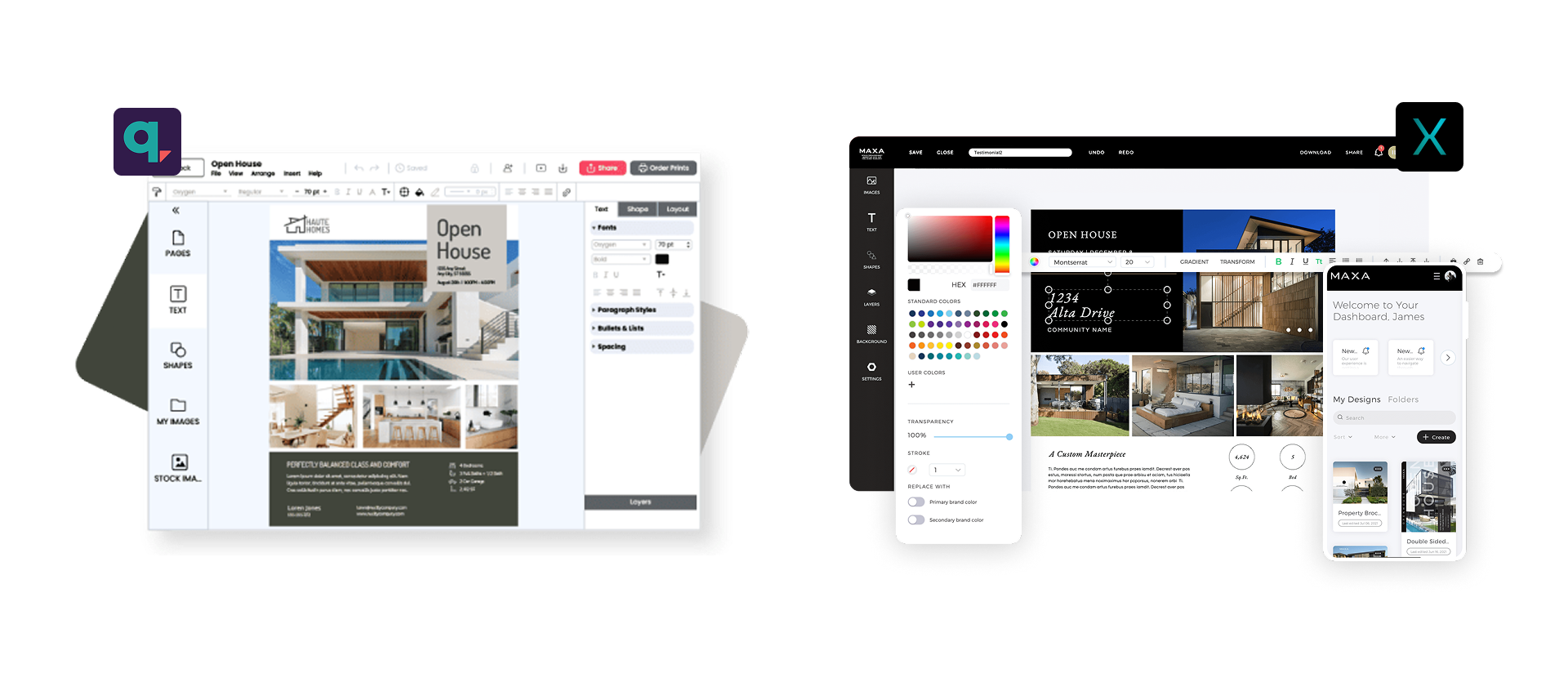
Both platforms deliver on their promises, but the difference lies in their focus. If real estate is part of a broader marketing endeavour spanning multiple industries, Marq can be a solid fit. But if you run a brokerage or franchise and want a marketing center built around listings, agents, MLS data, and scale, MAXA is purpose-built for that world.
Explore how MAXA helps real estate brands turn listing data into ready-to-use templates and automated campaigns for every agent.



.png)