For brokerages and agents, the conversation around editable vs. locked templates in real estate isn’t really a choice of either. It’s more of a balancing act. Most platforms tend to lean too far in one direction. They either lock everything up in the name of brand control or open the floodgates and hope agents don’t break brand and legal compliance.
What templates are meant to be is a system that protects the brokerage brand, maintains regulatory consistency, and allows agents to market themselves quickly without having to reinvent the wheel.
Let’s unpack the fundamental differences between the two, the types of tools brokerages use to support each model, and how to build a template strategy that scales with your agents.
Why Branding at Scale Is a Challenge in Real Estate
When brokerages are still in their infancy, with only a handful of agents handling the listings, you can get away with the informal oversight and manual checking of real estate marketing materials that get published. But, as teams grow, so does the production volume, and that’s when branding becomes a challenge.
Real estate marketing runs on high volumes of recurring assets. Just think about it. Listings require flyers and digital ads. Open houses need signage and handouts. Agents rely on postcards, different graphics for their social media marketing strategies, and email visuals to stay visible in their markets, and the competition is fierce, to say the least.
When you have dozens, if not hundreds, of agents producing these assets independently, even small deviations in fonts, colors, logos, or image treatment add up fast, so you can kiss your branding goodbye. It’s usually not intentional, though.
The stakes rise even higher with printed materials. Once something goes to print, there’s no opportunity to correct outdated logos, off-brand colors, or compliance issues. Those pieces live in mailboxes, at open houses, and across neighborhoods long after they’re discovered to be wrong. They will even continue to be distributed and find their way to potential customers long after you make new ones.
This is why templates become foundational as brokerages scale. This is also why you need the right system.
Editable vs. Locked Templates: What’s the Difference?
Let’s take a closer look at the differences between editable and locked templates so you get a better idea of their functionalities.
Editable Templates
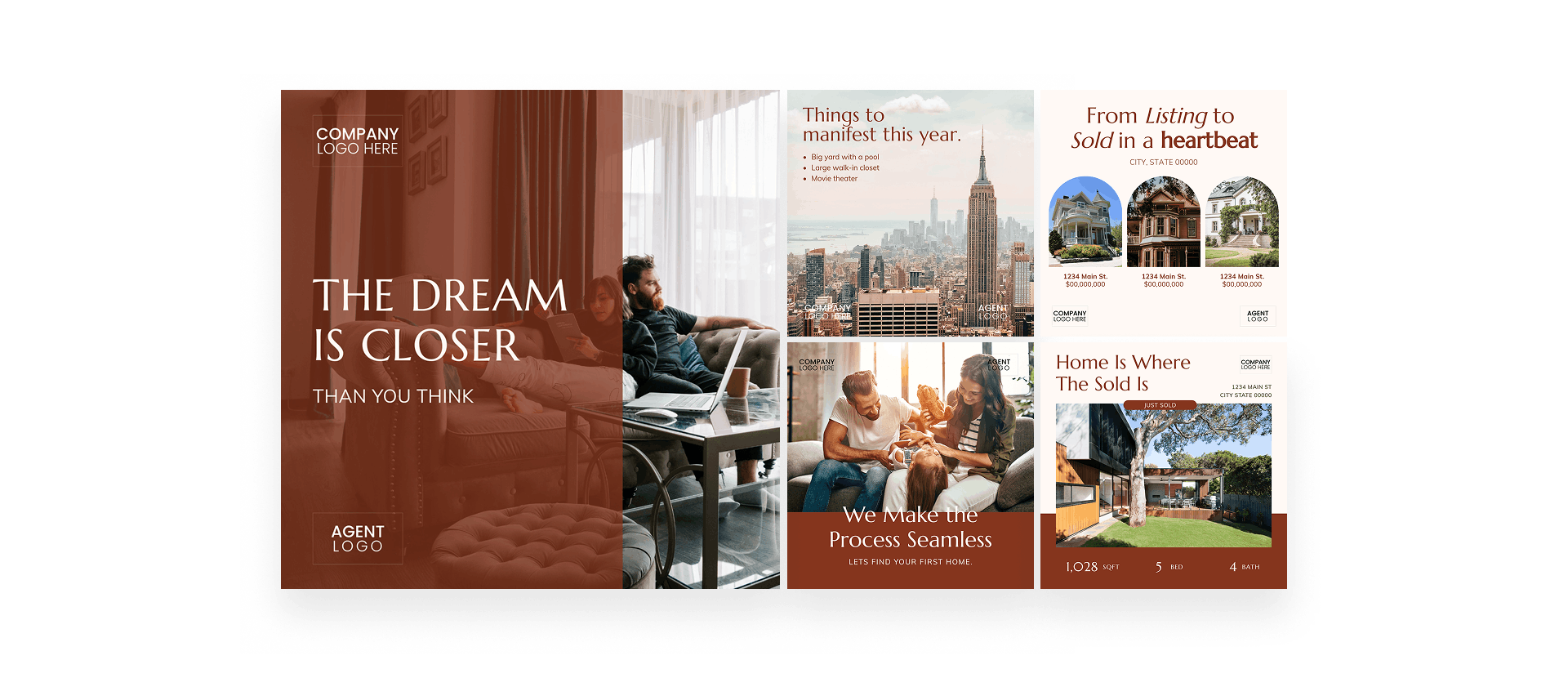
Editable templates are marketing assets that allow agents to modify key elements themselves, including text, listing details, fonts, colors, and other layout elements. Technically, all templates can be editable if admins make them so, but it depends on the platform. The goal of editable templates is to enable agents and brokers to quickly personalize items without starting from scratch, which is one of the reasons why most agents ignore templates in the first place.
Strengths:
- Fast turnaround for agents
- High flexibility for local market customization
- Reduced need for the design team’s involvement
- Support for frequent updates and iteration
Weaknesses:
- Difficult to maintain brand consistency at scale
- Higher risk of incorrect logos, fonts, or colors
- Increased compliance risk if guardrails are weak
Editable templates are a go-to option when you need something done quickly and with great adaptability, such as social media graphics, digital listing promotions, and agent announcements. These are usually done at high volume and have a short lifecycle, so the risk is lower than that posed by elements on locked templates.
Locked Templates
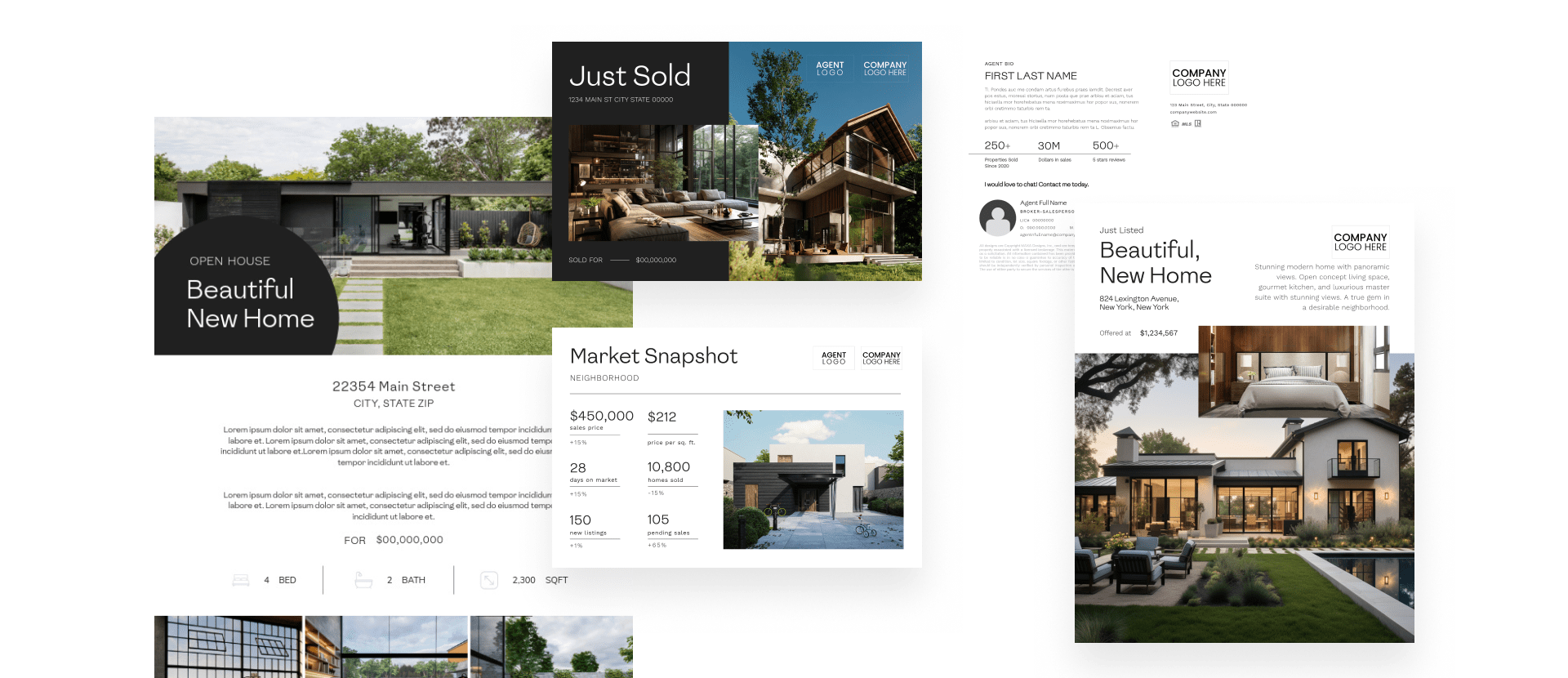
Locked templates are pre-approved, heavily governed marketing assets in which most elements are fixed to ensure brand and regulatory compliance. The only elements that can usually be changed are agent contact details, listing information, headshots, and photos; logos and office icons are locked.
Strengths:
- Strong brand consistency across all agents
- Reduced risk of compliance and legal errors
- Ideal for printed materials where mistakes are costly
- Minimal oversight is required once templates are approved
Weaknesses:
- Less flexibility for agent customization
- Can feel restrictive for highly independent agents
- Slower to adapt if market or branding updates are needed
If you are looking at flyers, postcards, direct mail campaigns, open house materials, signage, and any other marketing asset that is commonly printed, you need brand control, and accuracy is more important there than customization.
Which One Should You Use?
It’s more about knowing where each template belongs rather than choosing one type over the other. Let’s check out the trade-offs so that you can make an informed decision.
Level of control
- Editable templates: Offer low to moderate control. Agents can customize content freely.
- Locked templates: Provide high control. The design and structure stay fixed.
Flexibility
- Editable templates: Highly flexible and easy to adapt for local needs.
- Locked templates: Limited flexibility, with changes restricted to approved fields.
Brand consistency risk
- Editable templates: Higher risk as teams grow and variations compound.
- Locked templates: Low risk, since branding is protected by design.
Compliance risk
- Editable templates: Varies depending on permissions and guardrails.
- Locked templates: Minimal once templates are approved and locked.
Best use for listings
- Editable templates: Digital-first listing promotions that change frequently.
- Locked templates: Print listings and standardized listing collateral.
Best use for brand identity assets
- Editable templates: Not ideal for core brand materials.
- Locked templates: Ideal for brand-critical and customer-facing assets.
Speed to market
- Editable templates: Very fast for agents to publish.
- Locked templates: Fast once templates are set up and approved.
Scalability
- Editable templates: Poor scalability without strong guardrails.
- Locked templates: Built for large teams and multiple offices.
Tools That Support Editable and Locked Templates
Real estate marketing software solutions have made the creation and distribution of marketing materials much easier by enabling template-based workflows. Plus, the platforms include not only content design and management, but also CRM integration, automation, and analytics, making them a one-stop shop for marketing teams.
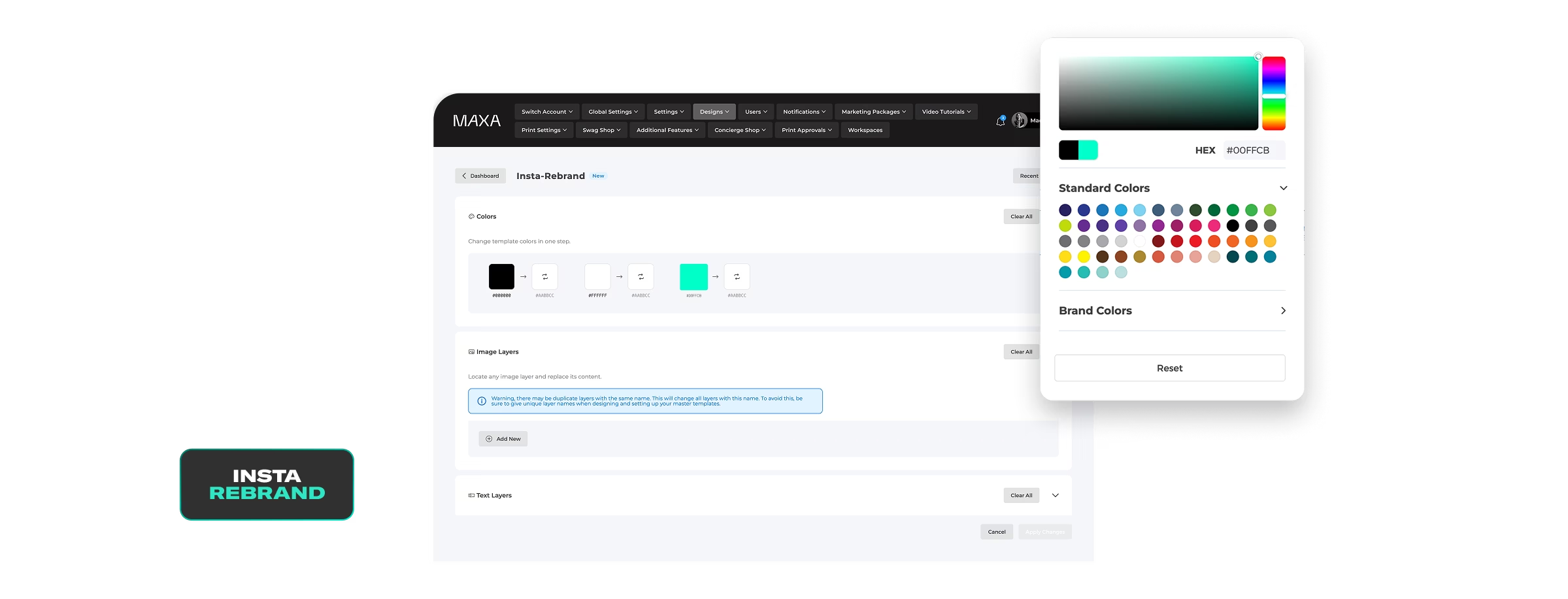
Platforms like MAXA are built around this reality. Instead of handing agents fully open designs or completely locked files, teams can lock down the elements that should never change, such as logos, fonts, brand colors, imagery, and disclaimers.
At the same time, agents will have room to update what needs to change day to day. You can even tailor those rules by DBA, team, or individual user, which makes scaling across offices far more manageable.
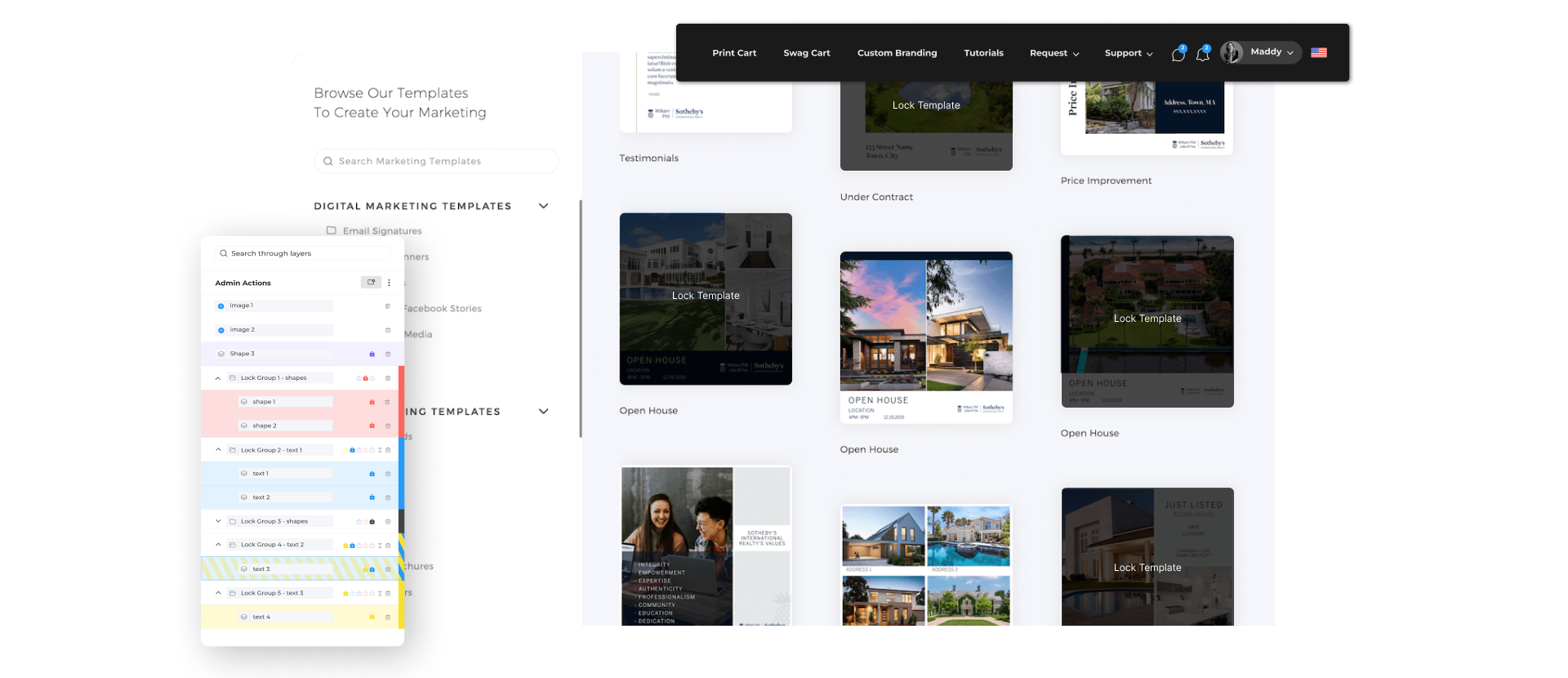
MAXA’s color-based locking system makes this control clear and usable for agents. For example, red locks protect elements that should never change. Blue locks keep layouts intact while allowing text edits.
More general tools like Canva Teams, Marq, and Desygner can handle basic templates and light brand rules, but they aren’t designed around real estate compliance, print accuracy, or multi-office governance, so these gaps will widen as teams grow.
What Should Be Editable vs. Locked Inside a Template
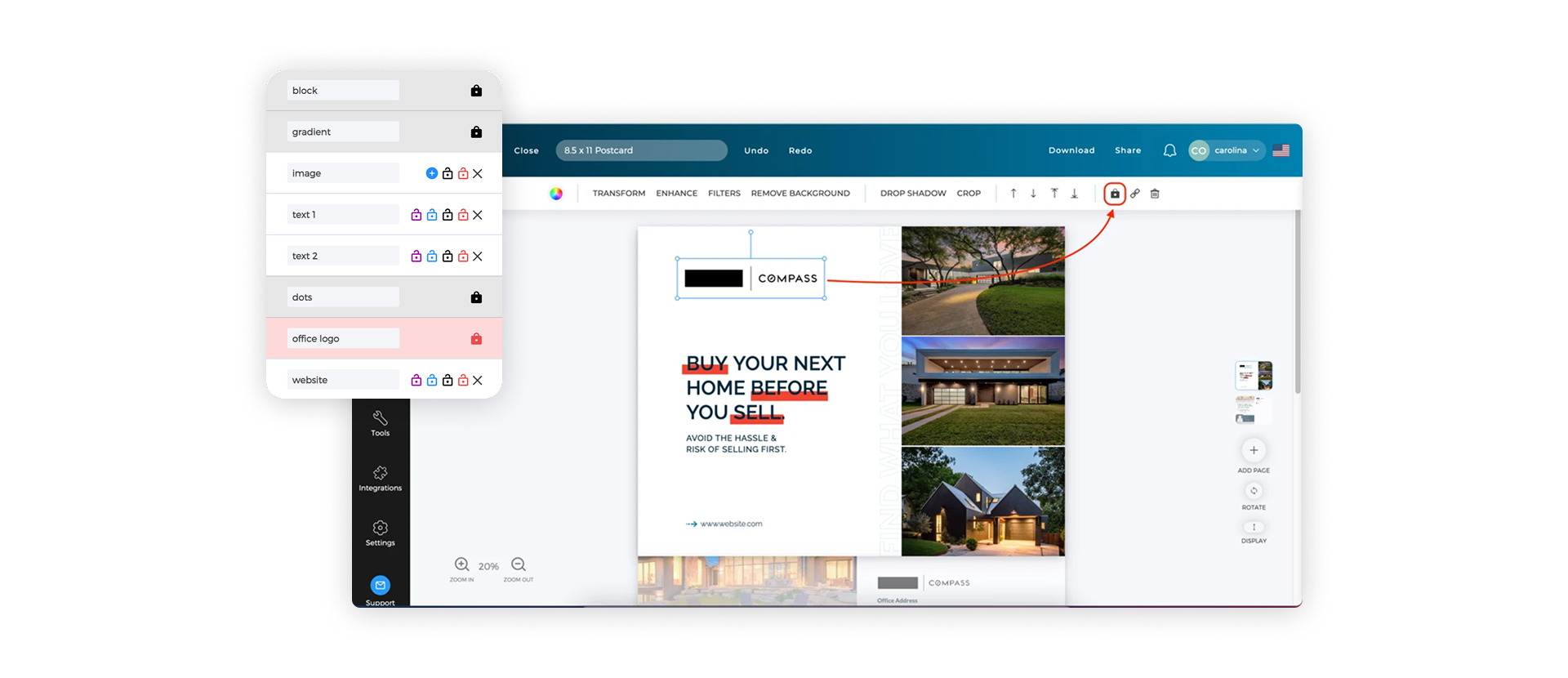
To keep templates brand-safe, you need to set the rules regarding each element on a template and make it editable or lockable. Here’s the starting point for teams that you can mirror across different materials.
Locked Elements
- Brokerage and sub-brand logos
- Fonts and font sizes
- Brand color palettes
- Legal disclaimers, licensing language, and compliance text
- Overall layout and spacing
Editable Elements
- Agent name, headshot, and contact information
- Listing photos and property imagery
- Price, address, and MLS details
- Property features, highlights, and descriptions
Final Thoughts: Scale Your Branding Without Losing Control
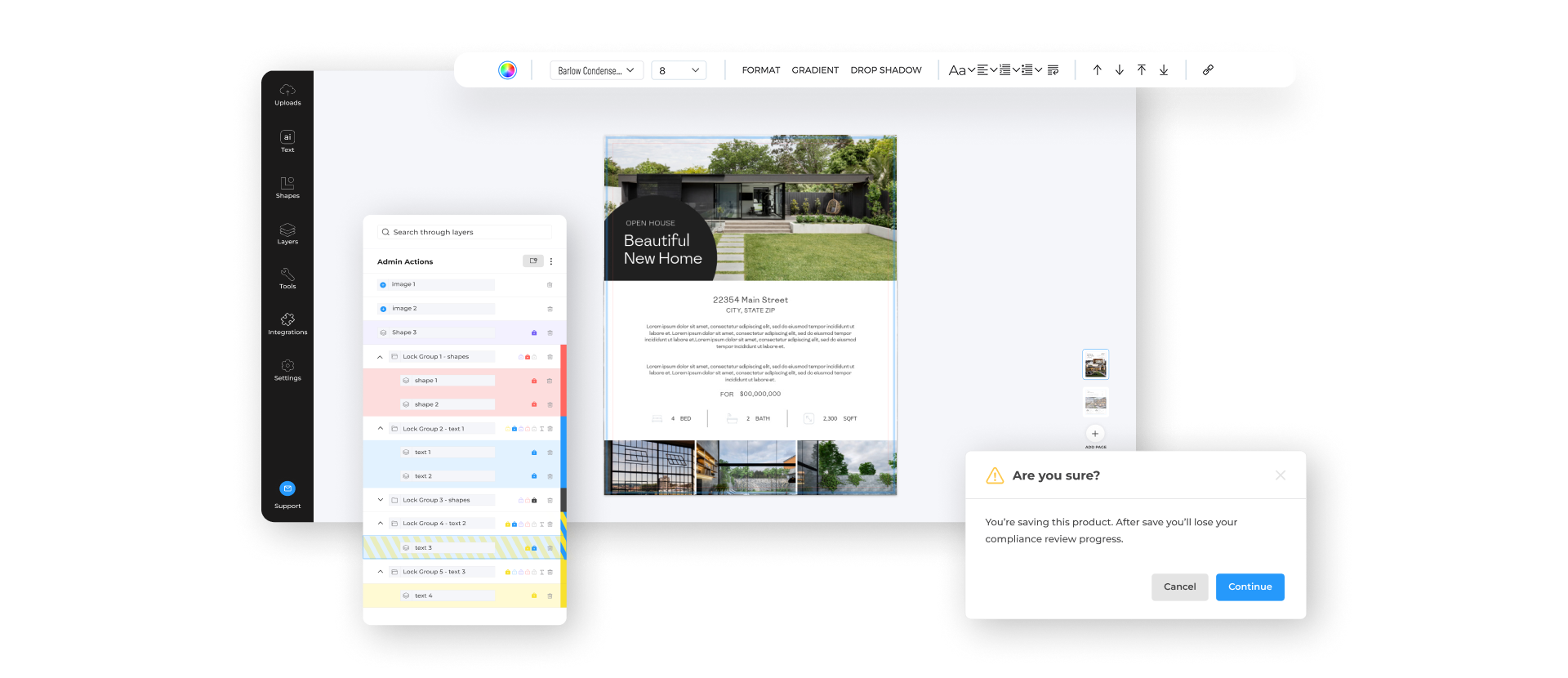
The cost of inconsistent branding is high and grows with your team. More agents mean more room for sloppy mistakes that can affect your brand image and overall performance. The most effective way to avoid them is by using the right template structure brought to you by real-estate-specific tools like MAXA.
With MAXA, your locked elements protect what matters the most, editable fields keep production moving, and automated workflows reduce friction for everyone involved. Reach out to see how you can scale your branding with a real estate marketing plan that scales without slowing your business down.