

The State of Design in Real Estate and Mortgage
An independent report by MAXA Designs in partnership with HousingWire — examining what the industry's best marketing teams are doing differently, where the gaps are, and what it looks like when design is taken seriously.
The Numbers Behind the Industry
50%
Of home buyers cried at least once during the purchase process
A 2022 Zillow survey of 2,000+ recent buyers found that the mortgage process generates genuine emotional distress — with 61% of millennial buyers reporting the same. Design's job is to reduce that anxiety, not add to it.
90%
Of buyers describe the home-buying process as stressful
The same Zillow research found near-universal stress in the transaction. Brands that communicate comfort and expertise from first contact are working against a strong headwind — and winning.
61%
Of buyers chose their agent through referral or prior relationship
NAR's 2024 Profile of Home Buyers and Sellers: 40% through referral, 21% from a prior agent. Brand investment protects the agent relationships that generate those referrals.
80%
Of newly-licensed agents don't renew at the end of their first two-year cycle
NAR membership data shows ~87% attrition by year five. The brands built around agent success — not just consumer acquisition — are the ones changing this number.
70%+
Of digital transformations fail to meet their objectives
McKinsey research cited in Inman (December 2025) — not because the technology was wrong, but because the people using it were never involved in its design. Brand has the same failure mode.
10%
How far real estate and mortgage lag behind consumer brand standards
“We’ve always been behind consumer brands by about 10%.” — Lauren Henss, VP of Marketing, First Team Real Estate. The gap is known. Closing it is the work.

James Wong
Why Design Wins in Real Estate
Fourteen years ago, a friend handed me my first opportunity to brand real estate agents. I was twenty years old, working off a borrowed laptop, with no idea the thing I was building would eventually become the company I run today. What I understood even then was that design was not decoration. It was the first thing a buyer, an agent, or a recruit encountered before they ever spoke to a person.
MAXA has spent fourteen years sitting inside the marketing operations of more than 250 enterprise brands and building tools that serve over 400,000 sales professionals. That vantage point gives us something hard to come by: a real-time, ground-level view of how companies approach design, where they invest, where they skip corners, and what happens to their growth as a result. The difference between brands that use design as a competitive weapon and those for whom it becomes a bottleneck is almost never budget. It is intention.
I built the Exhibit Awards in 2022 because the companies that invested seriously in their brand grew faster — and the industry was not giving them a stage. This report is the first attempt to document what the best teams in this industry are actually doing, where the gaps are, and what it looks like when design is taken seriously. What follows is not a comprehensive survey. It is an honest look at what the mirror is showing.
What's Inside

The Sea of Sameness
Why the industry looks like itself, and what it costs.
What Good Looks Like
The qualities the best submissions shared — and how to build them.
The Hierarchy Problem
Who the brand is actually for — and why most companies have it wrong.
The AI Inflection Point
What AI does to design, and what it cannot do.
The Recognition Gap
Why acknowledging great design raises the standard for everyone.
Spotlight Interviews

%20(1).jpg)

What the Report Found
Why does real estate marketing all look the same?
The industry has been learning from each other for long enough that the output of that education is no longer differentiation but repetition. When a new brokerage studies what successful incumbents are doing, it produces a version of those incumbents — and the pattern compounds. Real estate and mortgage companies have no shortage of creative people. The constraint is execution and consistency, not imagination.
"In mortgage and real estate marketing, there is no gap in creativity. The gap exists in execution, and primarily in consistency."
The strongest submissions shared one quality that proved difficult to define at first and then impossible to miss: the story matched the design. What the brand claimed to be, it also was — visually and experientially — at every touchpoint. The remove-the-logo test: if you removed the company name from every piece of material, could anyone still identify it as yours? For the best submissions, the answer was yes.
"I want to see if I can feel who you are before I read a single word. What stops me first is design, color, and whether the submission holds together as a complete picture."
What separates the brands that stand out from those that blend in?
Who is real estate brand actually for — the agent or the consumer?
One of the most persistent structural failures in brand strategy is a misunderstanding of who the primary audience actually is. The brokerage's primary marketing audience — the person whose loyalty needs to be earned and maintained — is the agent, not the consumer. Companies that understand this design their brand to amplify agents, making the agent the hero and the brokerage the support structure. Companies that do not produce materials that speak past agents entirely.
"When you don't have a strong brand that agents want to use or feel connected to, that's when you see AI-generated content being distributed and effectively diluting the brand."
AI arrived in real estate and mortgage marketing at a moment when the industry was already struggling with the sameness problem. What it has largely done — in the hands of teams without a clear brand foundation — is make that problem faster and cheaper to produce. The technology is neither the solution nor the villain. It is an amplifier. What it amplifies depends entirely on what it is fed.
"AI models are specifically built to be very risk-averse. They don't take chances, and they don't have intuition in the same way that humans do. The output is safe and acceptable rather than surprising or specific."
"AI will tell you who you are. That's not the right order of operations."
Is AI helping or hurting design quality in this industry?
What happens when the industry starts recognizing great design?
The Exhibit Awards were built on a premise that is obvious in retrospect: the people doing creative work that makes real estate and mortgage companies visible, recognizable, and worth choosing have had almost no professional recognition. That absence is not a minor oversight. It is a structural disincentive that has kept design standards lower than they need to be by removing the competitive pressure that recognition creates.
"Everything begins and ends with marketing. Where have we been all this time? We should have been doing this all along."
What the Winning Brands Did
.avif)
How Epique Realty Built a Real Estate Brand That Doesn't Look Like Real Estate — and Won the Award Their CEO Had Been Chasing for Years
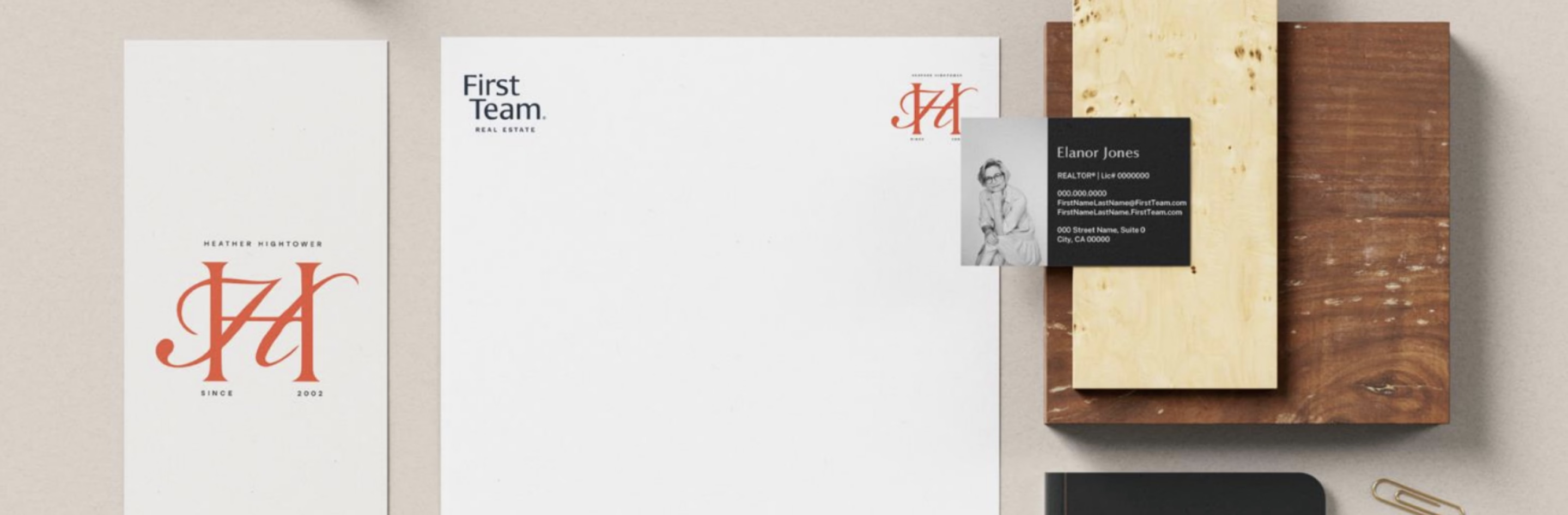
How a West Coast independent brokerage built a challenger brand from the ground up — activating a unified identity across 2,200+ agents and earning national recognition for omni-channel consistency.
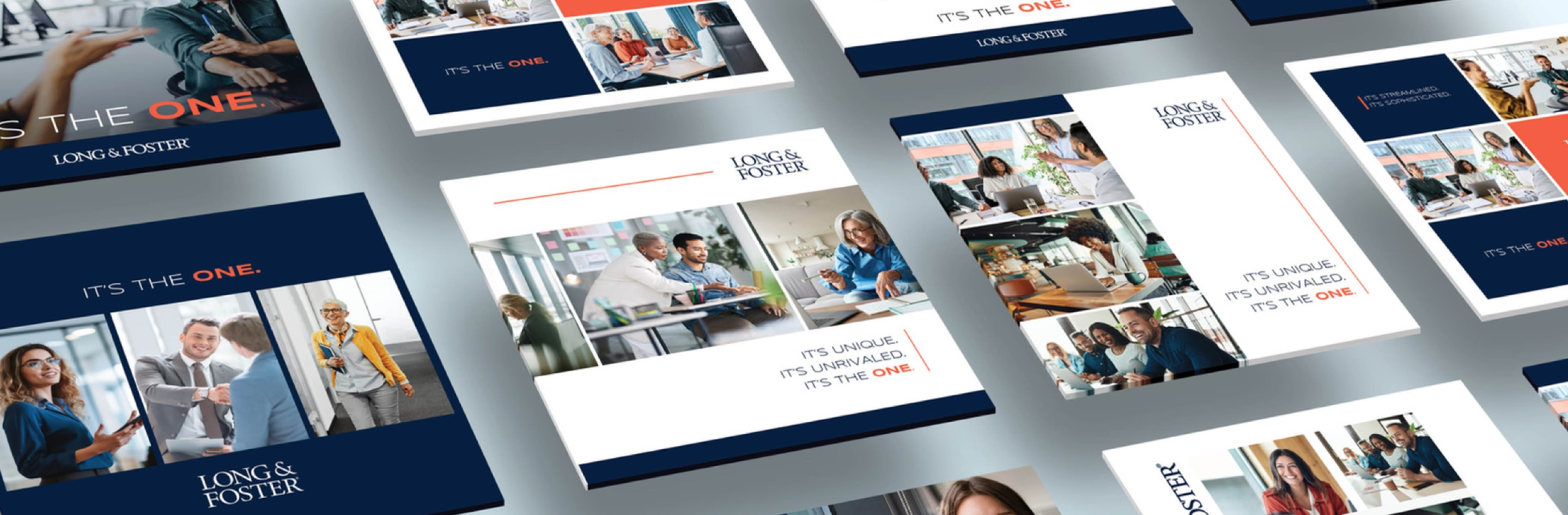
How Long & Foster Unified a Nearly 60-Year Real Estate Brand Around One Idea — and Closed the Gap Between Who They Had Become and the Story They Were Telling

How Nest Realty Turned a Rebrand Into an Award-Winning Brand Experience
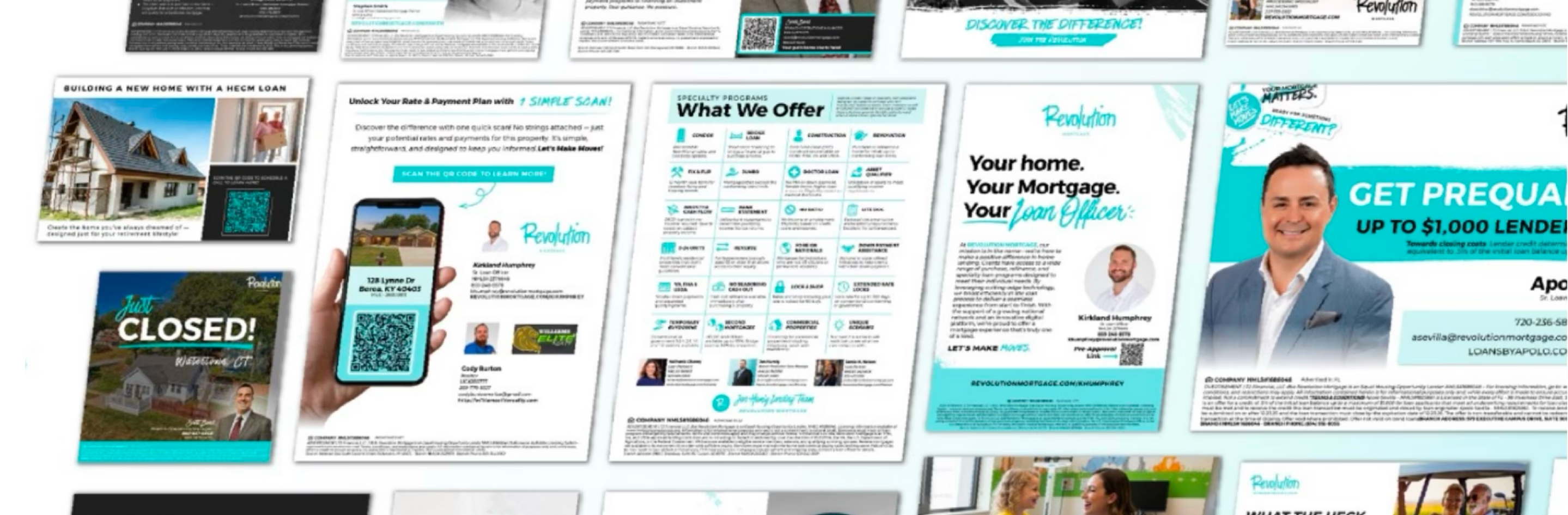
How Revolution Mortgage Set Out to Build the First Cool Brand in Mortgage — and Won the First National Award in the Program's History
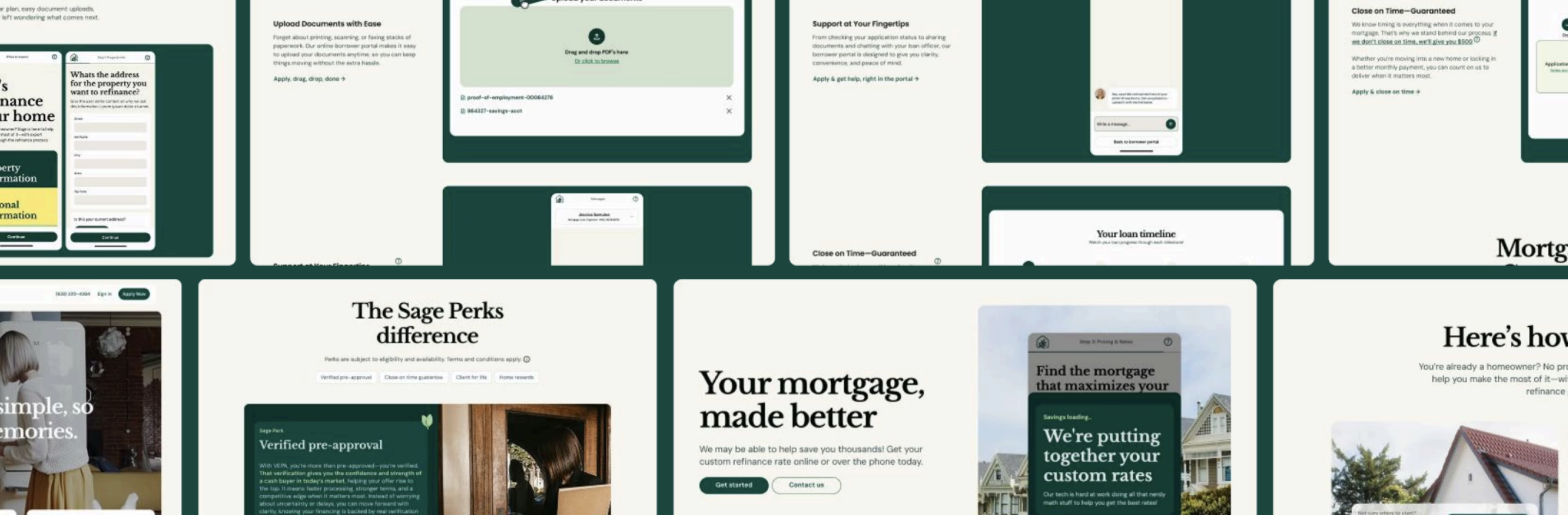
How Sage Home Loans Designed a Mortgage Brand That Feels Like a Warm Hug — And Changed What Mortgage Can Look Like
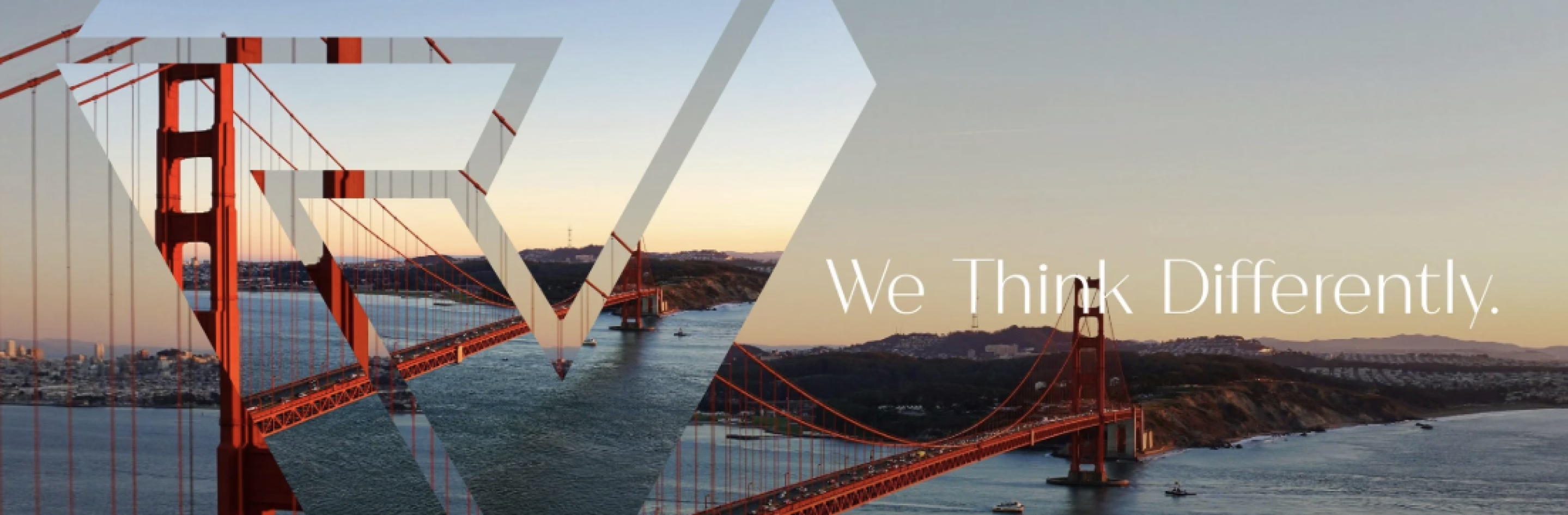
How Vanguard Properties Built a Real Estate Brand That Lasts 40 Years — by Knowing Exactly When to Change It

Take the Full Report With You
Frequently Asked Questions
See What Award-Winning Design Looks Like in Practice
Book a 30-minute demo with the MAXA team. We'll show you what top-performing brands in your market are doing — and how your team can do it too.
Is Your Brand Ready to Compete?
Submissions for the 2027 Exhibit Awards open later this year. Start building the brand that earns recognition.